Data Room Providers & Modern businesses no longer exchange confidential files through endless email attachments or unsecured cloud folders. Whether you’re raising capital, preparing for an acquisition, onboarding investors, or conducting legal reviews, having a secure virtual environment for sensitive documents has become essential. This is where data room providers play a critical role.
Organizations today deal with confidential financial reports, contracts, intellectual property, customer information, legal documents, and strategic business plans. Sharing these files securely while maintaining complete visibility into who accessed them is no longer optional—it’s a business requirement.
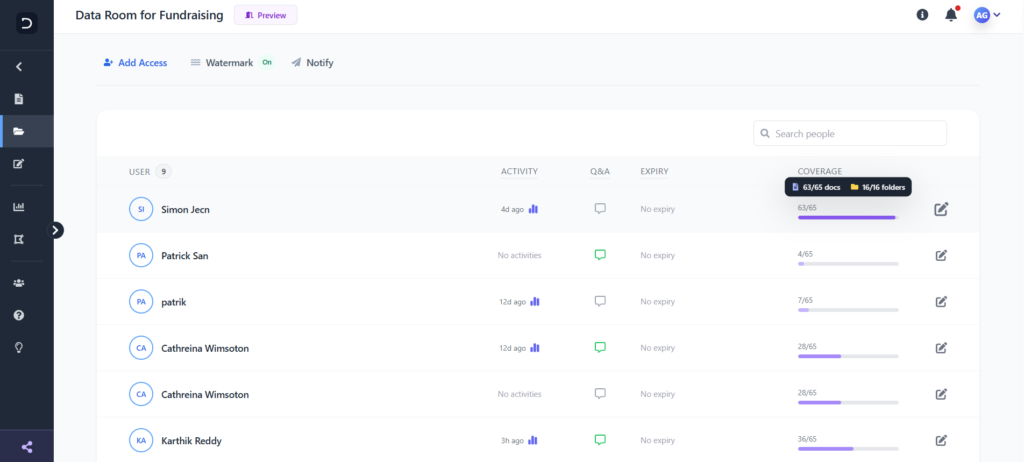
Among modern virtual data room solutions, DeelTrix VDR is designed to simplify secure document sharing for startups, founders, investors, legal teams, and businesses looking for enterprise-grade protection without unnecessary complexity.
In this comprehensive guide, you’ll learn everything about virtual data rooms, their benefits, use cases, security features, due diligence preparation, and how to choose the right solution for your organization.
What Are Data Rooms?
Before selecting a virtual solution, it’s important to understand the data rooms meaning in today’s business environment.
Traditionally, data rooms were physical spaces where confidential company documents were stored for review during mergers, acquisitions, audits, or fundraising. Interested parties had to visit these secure locations in person to inspect sensitive information under supervision, making the process slow, expensive, and difficult to scale.
Today, businesses use secure online platforms that allow authorized users to access confidential documents from anywhere while maintaining strict permissions, audit trails, and document security. These digital environments have replaced physical rooms because they significantly improve efficiency without compromising security.
Why Businesses Need Secure Document Sharing
Every organization eventually reaches a stage where confidential information must be shared externally. This may involve investors reviewing financial statements, lawyers examining contracts, buyers evaluating acquisition opportunities, or auditors checking compliance documentation.
Using standard email attachments introduces numerous challenges. Files can be forwarded without permission, multiple outdated versions create confusion, download activity becomes impossible to track, and organizations lose visibility once documents leave their control.
Modern secure platforms solve these problems by offering centralized document management, access controls, activity monitoring, watermarking, expiration dates, and permission-based sharing. These capabilities reduce operational risk while improving collaboration across stakeholders.
Why Companies Choose Data Room Providers
Businesses increasingly rely on data room providers because they combine document security with collaboration and transparency. Instead of sending hundreds of attachments individually, organizations upload files once and control every aspect of access from a centralized dashboard.
Users can see exactly who viewed a document, how long they spent reading it, whether downloads were attempted, and which files generated the most interest. These insights become particularly valuable during fundraising, acquisitions, partnerships, and board-level discussions.
Unlike generic cloud storage solutions, virtual data rooms are specifically designed for confidential business transactions where security, compliance, and auditability matter.
Common Use Cases for Virtual Data Rooms
Fundraising
Startups regularly share pitch decks, financial models, cap tables, legal documents, customer metrics, product roadmaps, and intellectual property with prospective investors. A secure platform keeps all information organized while allowing founders to understand investor engagement through analytics.
A properly organized data room for investors helps founders create a professional impression while accelerating fundraising conversations. Investors appreciate structured documentation because it reduces friction during evaluation.
Mergers and Acquisitions
One of the largest applications is data room m&a transactions. Buyers typically request access to thousands of confidential files before completing an acquisition.
These may include financial records, employment contracts, tax filings, supplier agreements, customer contracts, compliance reports, operational procedures, intellectual property documentation, and historical performance metrics. Secure sharing significantly reduces transaction delays while ensuring sensitive information remains protected.
Financial Audits
Auditors require organized access to accounting records, invoices, compliance documentation, tax reports, payroll information, and supporting evidence. Centralized document management makes reviews faster while maintaining a complete audit trail of every interaction.
Legal Collaboration
Law firms frequently exchange contracts, litigation records, corporate governance documents, licensing agreements, and confidential correspondence. Permission-based access ensures only authorized individuals can review privileged information.
Board Meetings
Executive teams often share confidential business strategies, quarterly reports, budgets, acquisition opportunities, risk assessments, and board presentations. Secure access prevents accidental leaks while simplifying collaboration.
Essential Features to Look For
Choosing among different data room providers requires understanding which features actually improve security and workflow rather than simply adding complexity.
Granular Permission Controls
Administrators should be able to define who can view, download, print, edit, or share each document. Permissions may differ between investors, lawyers, employees, consultants, and auditors.
Role-based access prevents unauthorized exposure while ensuring stakeholders receive only the information relevant to them.
Detailed Activity Tracking
Every document interaction should be logged automatically. This includes views, downloads, login history, session duration, device information, and user activity.
These insights help businesses identify highly engaged investors or detect suspicious behavior before it becomes a security concern.
Secure Link Sharing
Instead of emailing attachments repeatedly, organizations can generate secure document links with password protection, expiration dates, visitor verification, and download restrictions.
This approach reduces version confusion while maintaining centralized control over sensitive information.
Watermarking
Dynamic watermarks displaying user information discourage unauthorized screenshots and document leaks. Visible ownership information adds accountability without interrupting the reading experience.
Version Management
Business documents change frequently during negotiations. Version control ensures every stakeholder always accesses the latest approved file instead of outdated copies circulating through email chains.
Search and Organization
Folders, categories, tags, document indexing, and advanced search capabilities allow users to locate information quickly even when thousands of files are involved.
Efficient organization significantly improves productivity during large transactions.
Security Standards That Matter
Businesses trust data room providers because security extends far beyond simple password protection.
Enterprise-grade platforms typically include:
| Security Feature | Business Benefit |
|---|---|
| Role-based permissions | Restricts unauthorized access |
| Two-factor authentication | Prevents account compromise |
| Audit logs | Tracks every user action |
| Encryption | Protects files during storage and transfer |
| Dynamic watermarking | Discourages document leaks |
| Secure links | Eliminates risky attachments |
| Access expiration | Automatically removes access |
| Download restrictions | Keeps confidential files online only |
| IP restrictions | Limits access from approved locations |
| Activity analytics | Identifies engagement and unusual behavior |
These features create multiple layers of protection for highly confidential business information.
Building an Effective Investor Data Room
Creating a professional data room for investors involves much more than uploading random files into folders.
Investors expect organized information presented logically. A well-structured repository demonstrates operational maturity while reducing repetitive information requests throughout the fundraising process.
Typical sections include:
- Executive summary
- Pitch deck
- Financial statements
- Revenue metrics
- Product overview
- Customer traction
- Cap table
- Market research
- Intellectual property
- Team information
- Legal documents
- Growth projections
Providing comprehensive documentation upfront allows investors to evaluate opportunities more efficiently.
Understanding the Data Room Due Diligence Checklist
Preparing documents before a transaction saves significant time later. A complete data room due diligence checklist ensures important information is available before buyers, investors, auditors, or legal teams request it.
Common categories include:
Corporate Documents
Business registrations, articles of incorporation, shareholder agreements, board resolutions, organizational charts, and governance records establish legal ownership and operational structure.
Financial Information
Audited financial statements, profit and loss reports, balance sheets, cash flow statements, budgets, forecasts, and tax filings demonstrate financial health.
Legal Documents
Contracts, employment agreements, supplier agreements, licensing arrangements, litigation records, compliance certificates, and insurance policies reduce legal uncertainty.
Customer Information
Major customer contracts, recurring revenue reports, churn metrics, testimonials, renewal statistics, and pipeline summaries illustrate commercial performance.
Intellectual Property
Patents, trademarks, copyrights, software ownership documentation, source code ownership records, and licensing agreements protect innovation.
Human Resources
Employment contracts, organizational structures, compensation policies, stock option plans, and benefits documentation provide workforce transparency.
Preparing these documents in advance creates a smoother review process while reducing last-minute stress.
What Should Be in a Data Room?
Many founders ask what should be in a data room before beginning fundraising or acquisition discussions.
The answer depends on the transaction, but most organizations should include documentation covering financial performance, legal compliance, operations, technology, intellectual property, customers, employees, governance, and strategic planning.
Rather than overwhelming reviewers with unnecessary information, focus on quality, organization, and completeness. Clear folder structures make navigation easier while demonstrating professionalism.
Missing documentation often creates additional investor questions that slow decision-making.
Choosing the Right Data Room Software
Selecting the right data room software involves evaluating both security capabilities and day-to-day usability.
A complicated platform may satisfy compliance requirements but discourage adoption across internal teams. Conversely, an overly simple solution may lack the controls required for high-value transactions.
Important evaluation criteria include:
- Easy document uploads
- Fast user onboarding
- Permission flexibility
- Audit reporting
- Secure sharing
- Visitor analytics
- Mobile compatibility
- Scalable storage
- Customer support
- Transparent pricing
Businesses should also consider future needs rather than selecting a solution designed only for their current project.
Mistakes Businesses Should Avoid
Organizations often introduce unnecessary risk when sharing confidential documents.
Common mistakes include emailing attachments repeatedly, granting excessive permissions, forgetting to remove inactive users, failing to organize folders logically, neglecting document version control, and allowing unrestricted downloads.
Another frequent issue is storing highly confidential documents inside generic cloud storage platforms that lack enterprise audit capabilities. Secure virtual environments provide significantly better governance and visibility.
How Analytics Improve Business Decisions
One of the biggest advantages offered by data room providers is document analytics.
Rather than guessing investor interest, businesses can observe which documents receive the most attention, identify frequently revisited files, understand viewing duration, and recognize engagement trends across stakeholders.
These insights help sales teams prioritize prospects, founders identify interested investors, and executives prepare better follow-up conversations based on actual document behavior.
Analytics transform document sharing from a passive activity into an actionable business intelligence tool.
Why Startups Should Invest Early
Many startups wait until fundraising begins before organizing confidential information. Unfortunately, this creates unnecessary pressure during an already demanding process.
Preparing documentation early allows founders to update records gradually instead of assembling everything under tight deadlines. Investors also appreciate businesses that demonstrate operational discipline through structured documentation.
Early preparation often accelerates fundraising because fewer documents need to be requested later.
How DeelTrix VDR Simplifies Secure Document Sharing
DeelTrix VDR is built for organizations that need secure document sharing without unnecessary complexity.
Businesses can securely upload confidential files, organize folders, control user permissions, generate secure document links, monitor visitor activity, restrict downloads, and gain visibility into engagement from a centralized dashboard.
Instead of managing countless email attachments, organizations maintain one secure source of truth where documents remain updated, protected, and fully traceable.
Whether supporting fundraising, investor communication, due diligence, legal collaboration, or business development, DeelTrix VDR helps teams share sensitive information confidently while maintaining complete control.
The Future of Virtual Data Rooms
Digital collaboration continues evolving as organizations operate across multiple countries and time zones. Secure online document management is becoming standard practice rather than an optional convenience.
Artificial intelligence, automated document classification, advanced search capabilities, smarter permission management, predictive analytics, and enhanced compliance reporting will continue improving business workflows.
Organizations that adopt secure document-sharing practices today position themselves for faster collaboration, stronger governance, and better decision-making as business transactions become increasingly digital.
Final Thoughts
Choosing the right data room providers can significantly improve the way organizations manage confidential information. Whether supporting fundraising, mergers, legal reviews, financial audits, or board collaboration, secure virtual environments reduce risk while improving efficiency.
Businesses should prioritize security, transparency, analytics, permission management, and ease of use when evaluating solutions. A well-organized virtual data room not only protects sensitive information but also creates a more professional experience for investors, buyers, auditors, and business partners.
For companies seeking a modern approach to secure document sharing, DeelTrix VDR provides the tools needed to organize confidential information, monitor engagement, and collaborate securely throughout every stage of business growth.
FAQ’s
What are data room providers?
They are companies that offer secure virtual platforms for storing, organizing, and sharing confidential business documents during fundraising, mergers, acquisitions, legal reviews, audits, and other sensitive transactions.
What is a virtual data room used for?
A virtual data room is commonly used for fundraising, mergers and acquisitions, due diligence, investor communication, legal collaboration, financial audits, and secure document sharing with controlled access.
How is a virtual data room different from cloud storage?
General cloud storage focuses on file storage and collaboration, while virtual data rooms provide advanced security features such as permission controls, audit logs, watermarking, visitor analytics, secure sharing links, and detailed access reporting.
Why is a data room important for investors?
Investors need organized access to financial information, legal documents, business metrics, customer data, and growth plans. A structured virtual data room speeds up due diligence while creating a professional impression.
What should be in a data room?
A complete virtual data room typically includes corporate documents, financial statements, legal agreements, tax records, customer information, intellectual property, HR documents, compliance records, and business strategy materials.
What is included in a data room due diligence checklist?
A typical checklist covers incorporation documents, shareholder information, financial reports, contracts, tax filings, employee records, customer agreements, intellectual property documentation, compliance certificates, insurance policies, and operational information.
Can startups benefit from using virtual data rooms?
Yes. Startups use virtual data rooms to share fundraising documents securely, track investor engagement, organize company information, and simplify due diligence during funding rounds.
Is DeelTrix VDR suitable for secure document sharing?
Yes. DeelTrix VDR is ISO Certified & provides secure document sharing with permission-based access, visitor analytics, secure links, activity tracking, and centralized document management for fundraising, due diligence, investor communication, and confidential business collaboration.