Data Rooms for Due Diligence: Introduction
When a business prepares for fundraising, mergers, acquisitions, strategic partnerships, audits, or legal reviews, document management quickly becomes one of the biggest challenges. Companies often need to share hundreds or even thousands of confidential files with investors, buyers, advisors, and legal teams while maintaining complete control over who can access each document.
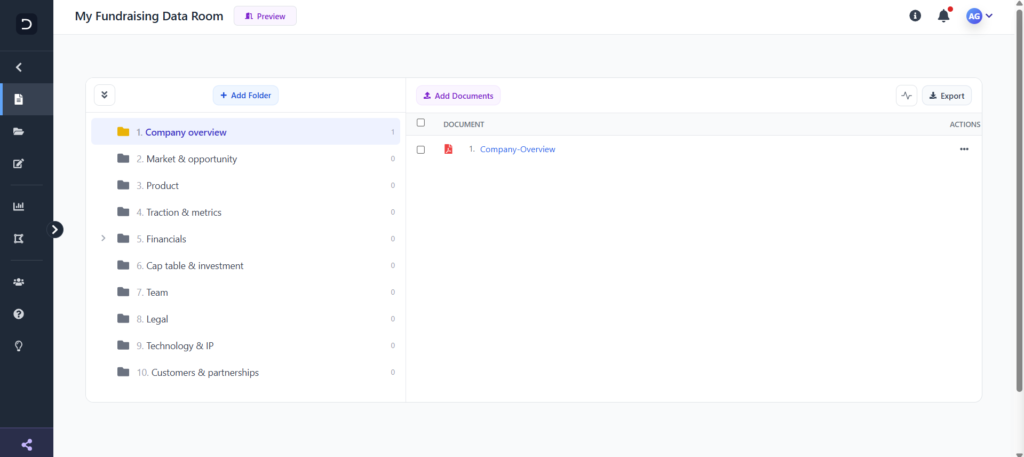
This is where Data Rooms for Due Diligence become an essential business solution. Instead of emailing attachments or relying on unsecured cloud folders, organizations use secure digital environments that allow controlled document sharing, permission management, visitor tracking, watermarking, and detailed audit logs.
Modern businesses no longer view virtual data rooms as tools reserved only for billion-dollar acquisitions. Today, startups, SMEs, investment firms, venture capital funds, private equity firms, legal consultants, and enterprises all rely on secure document-sharing platforms to simplify complex transactions.
Whether you’re preparing for an investment round, selling a company, conducting compliance reviews, or managing corporate governance, choosing the right virtual data room can significantly reduce delays while improving trust among stakeholders.
What Are Data Rooms?
Before understanding why Data Rooms for Due Diligence matter, it’s helpful to understand the broader concept.
The data rooms meaning refers to secure spaces where confidential business information is stored and shared with authorized users. Traditionally, organizations maintained physical rooms filled with sensitive documents that only approved individuals could access.
Today, these physical rooms have largely been replaced by secure online platforms known as virtual data rooms. These platforms provide encrypted document storage, permission controls, activity tracking, download restrictions, and collaboration tools that make sensitive business transactions much easier.
Digital data rooms eliminate geographical limitations, allowing global teams to collaborate securely without sacrificing confidentiality.
Why Businesses Need Data Rooms for Due Diligence
Every major business transaction involves document verification.
Potential investors want financial records.
Buyers want operational information.
Lawyers review contracts.
Auditors verify compliance.
Banks inspect financial statements.
Without Data Rooms for Due Diligence, businesses often struggle with version control, document duplication, unsecured email attachments, and inefficient communication.
A centralized virtual data room solves these challenges by creating one secure source of truth where every authorized participant can review the latest documents while administrators maintain complete visibility into every action.
This level of organization dramatically speeds up the review process while reducing operational risk.
Common Situations Where Data Rooms for Due Diligence are use
Although many people associate virtual data rooms with mergers and acquisitions, their use extends much further.
Organizations commonly use secure data rooms for:
- Fundraising
- Venture capital investments
- Private equity transactions
- IPO preparation
- Business acquisitions
- Legal compliance
- Internal audits
- Financial audits
- Licensing agreements
- Board communications
- Corporate restructuring
- Bankruptcy proceedings
- Government inspections
The flexibility of modern platforms allows organizations of every size to manage confidential documentation securely.
Essential Features of Modern Data Rooms for Due Diligence Software
Choosing reliable data room software requires evaluating much more than simple cloud storage.
The best platforms typically include:
| Feature | Business Benefit |
|---|---|
| End-to-end encryption | Protects confidential files during storage and transfer |
| Granular permissions | Controls exactly who can view, print, or download documents |
| Activity tracking | Records every user action for auditing purposes |
| Dynamic watermarking | Discourages unauthorized sharing |
| Version control | Prevents confusion from outdated documents |
| Document indexing | Improves organization and navigation |
| Full-text search | Helps reviewers locate files instantly |
| Q&A management | Enables efficient communication between stakeholders |
| Audit logs | Creates transparent compliance records |
| Multi-factor authentication | Adds another layer of account security |
These capabilities transform document sharing into a secure, trackable, and highly organized process.
How Data Rooms for Due Diligence Improve Business Transactions
Organizations handling confidential transactions need more than document storage—they need complete operational control.
Using Data Rooms for Due Diligence allows administrators to:
- Grant role-based access
- Revoke permissions instantly
- Monitor document engagement
- Restrict downloads
- Disable screenshots where supported
- Track user activity
- Generate compliance reports
- Maintain document history
Instead of wondering whether a potential investor reviewed financial statements, administrators can see exactly which files were opened, how long they were viewed, and which sections attracted the most attention.
These insights help management teams prepare more effectively for meetings and negotiations.
What Should Be in a Data Room?
One of the most common questions founders ask is what should be in a data room.
Although every business is unique, most virtual data rooms include documents such as:
Corporate Documents
- Certificate of incorporation
- Articles of association
- Shareholder agreements
- Board resolutions
- Cap table
Financial Information
- Profit and loss statements
- Balance sheets
- Cash flow reports
- Tax filings
- Financial forecasts
Legal Documents
- Customer contracts
- Vendor agreements
- Employment agreements
- Intellectual property filings
- Insurance policies
Operational Documents
- Organizational charts
- Product documentation
- Compliance certificates
- Process documentation
- Business licenses
Sales and Marketing
- Customer metrics
- Revenue reports
- Market analysis
- Growth strategy
- Sales pipeline
Technology
- Product architecture
- Security policies
- Infrastructure documentation
- Development roadmap
Preparing these materials early significantly accelerates transaction timelines.
Building a Strong Data Room Due Diligence Checklist
Every organization should prepare a comprehensive data room due diligence checklist before inviting external reviewers.
A well-prepared checklist generally includes:
- Corporate governance documents
- Financial statements
- Tax records
- Legal agreements
- Customer contracts
- Intellectual property
- HR policies
- Employee agreements
- Litigation history
- Regulatory compliance
- Product documentation
- Sales reports
- Technology infrastructure
- Insurance records
- Business plans
- Investment agreements
A structured checklist minimizes missing documents and reduces follow-up requests from investors or buyers.
Data Room for Investors
Investors evaluate opportunities based on both business performance and operational professionalism.
A properly organized data room for investors demonstrates transparency while making the investment review process much more efficient.
Instead of exchanging dozens of email attachments, founders can provide one secure access link where investors can browse categorized folders, review financials, examine customer metrics, and ask questions within the platform.
Investors also appreciate having access to searchable documents, organized folders, and clear version histories, all of which improve confidence in the management team.
Data Room M&A Transactions
One of the largest use cases for virtual data rooms is data room m&a activity.
Mergers and acquisitions involve enormous volumes of confidential information including:
- Financial records
- Legal agreements
- Customer contracts
- Vendor relationships
- Intellectual property
- Employee information
- Regulatory filings
Secure virtual data rooms allow multiple legal teams, advisors, accountants, and executives to review documents simultaneously while maintaining strict access controls.
This significantly reduces administrative overhead compared to traditional document-sharing methods.
Selecting the Right Data Room Providers
Not every virtual data room platform offers the same level of functionality.
When evaluating data room providers, businesses should compare:
- Security certifications
- Permission flexibility
- Pricing transparency
- User interface
- Customer support
- Storage capacity
- Analytics capabilities
- Compliance standards
- Ease of deployment
- Integration options
Organizations should also consider future scalability because document requirements often grow rapidly during fundraising or acquisition processes.
Data Room Bundle: Simplifying Document Organization
Many businesses prepare a complete data room bundle before initiating investor outreach.
Rather than uploading files gradually, companies organize every required document into structured folders before granting access.
A well-prepared bundle typically includes:
- Corporate records
- Financial reports
- Sales metrics
- Product information
- Legal agreements
- Intellectual property
- Compliance documents
- HR records
Preparing everything in advance reduces delays and demonstrates operational maturity.
Global Adoption of Virtual Data Rooms
Virtual data rooms are no longer limited to North America or Europe.
Businesses across emerging markets increasingly rely on secure document platforms to support fundraising, compliance, and international investment.
For example, searches related to data room ghana continue growing as startups, financial institutions, and advisory firms adopt digital document management solutions to support cross-border transactions.
The global demand reflects the increasing importance of secure digital collaboration across every industry.
Security Best Practices
Even the most advanced platform requires thoughtful administration.
Organizations should:
- Assign permissions carefully.
- Remove inactive users immediately.
- Enable multi-factor authentication.
- Review audit logs regularly.
- Organize folders consistently.
- Keep document versions updated.
- Apply watermarking for sensitive files.
- Restrict downloads when appropriate.
- Use descriptive folder names.
- Archive outdated information.
These practices reduce security risks while improving operational efficiency.
Common Mistakes Businesses Should Avoid
Many organizations accidentally slow down their due diligence process through avoidable mistakes.
Some of the most common include:
- Uploading incomplete documents
- Poor folder organization
- Duplicate files
- Missing financial statements
- Outdated contracts
- Overly broad user permissions
- Unclear document naming
- Lack of version control
- Delayed responses to reviewer questions
Avoiding these issues creates a smoother experience for every stakeholder involved.
Benefits for Startups
Startups preparing for fundraising often have limited resources and small teams.
Using Data Rooms for Due Diligence enables founders to present their businesses professionally without spending excessive time managing email requests.
Instead of repeatedly sending financial models or legal documents to multiple investors, founders upload information once and securely control access for every interested party.
This also ensures everyone reviews identical document versions, reducing confusion throughout the fundraising process.
Benefits for Enterprises
Large organizations manage significantly more documentation during acquisitions, compliance reviews, and strategic transactions.
Enterprise teams benefit from Data Rooms for Due Diligence because they support thousands of documents, hundreds of users, detailed permission structures, comprehensive reporting, and advanced compliance capabilities.
These features help organizations maintain governance standards while accelerating transaction timelines across global teams.
The Future of Virtual Data Rooms
Technology continues transforming document management.
Modern virtual data rooms increasingly include:
- AI-powered document search
- Automated document categorization
- Smart redaction
- Predictive analytics
- Workflow automation
- Enhanced reporting
- Improved mobile accessibility
- Advanced collaboration tools
As business transactions become more digital, secure document platforms will continue evolving into comprehensive collaboration environments rather than simple storage systems.
Conclusion
Secure document management has become a fundamental requirement for modern businesses. Whether raising capital, completing acquisitions, managing compliance, or sharing confidential information with stakeholders, organizations need solutions that combine security, transparency, and operational efficiency.
Data Rooms for Due Diligence provide that foundation by centralizing sensitive information, simplifying collaboration, improving visibility, and protecting valuable business assets throughout every stage of a transaction.
By selecting reliable technology, organizing documents carefully, implementing strong security practices, and preparing comprehensive documentation in advance, businesses can shorten transaction timelines while creating greater confidence among investors, buyers, advisors, and partners.
FAQ’s
What is the primary purpose of Data Rooms for Due Diligence?
The primary purpose is to securely organize, manage, and share confidential business documents with authorized parties during fundraising, mergers, acquisitions, audits, legal reviews, and compliance processes while maintaining complete visibility over document access.
Who should use virtual data rooms?
Virtual data rooms are suitable for startups, enterprises, investment banks, venture capital firms, private equity firms, legal advisors, accounting firms, corporate finance teams, and any organization handling confidential business information.
How secure are modern data rooms?
Modern virtual data rooms typically use enterprise-grade encryption, multi-factor authentication, granular permission controls, watermarking, detailed audit logs, and secure cloud infrastructure to protect confidential documents.
Can small businesses benefit from Data Rooms for Due Diligence?
Yes. Small businesses and startups often benefit significantly because they can securely share documents with investors, advisors, and partners without relying on unsecured email attachments or public cloud storage.
How long does it take to prepare a virtual data room?
Preparation time depends on the size of the business and document availability. A startup may organize its documents within a few days, while larger enterprises may require several weeks to build a complete and well-structured repository.
Can users track document activity inside a virtual data room?
Yes. Most modern platforms provide detailed analytics showing who viewed documents, how long files were accessed, download activity, login history, and other engagement metrics that help administrators monitor reviewer interest.
What industries commonly use Data Rooms for Due Diligence?
Industries including finance, healthcare, manufacturing, technology, legal services, biotechnology, energy, real estate, and professional consulting frequently use virtual data rooms because they regularly handle confidential business documentation.
is DeelTrix ISO Certified for security? : Yes