Thiel Capital San Francisco: Investor Profile Snapshot
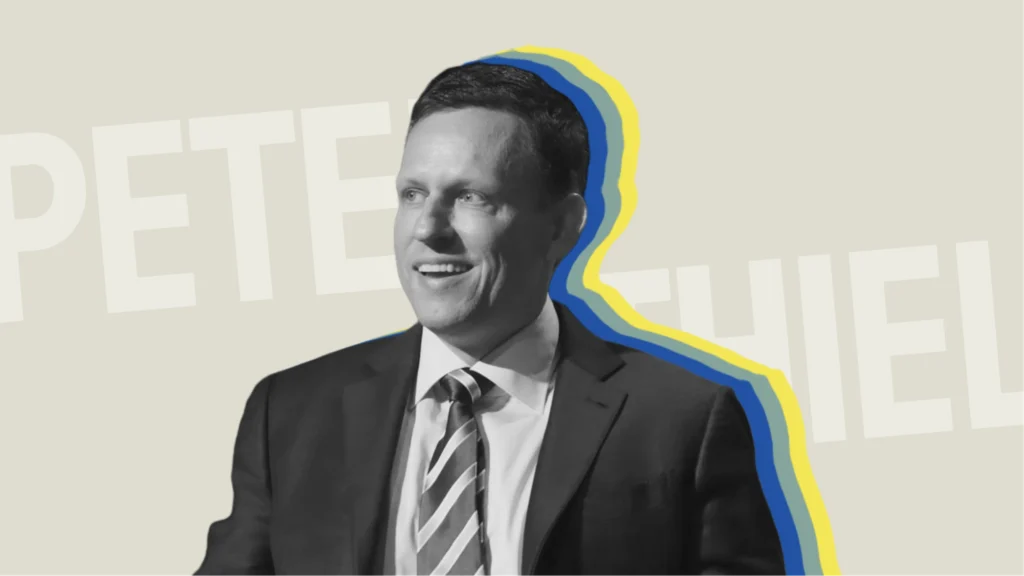
| Location | San Francisco, California |
|---|---|
| Notable Investments |
Alchemy Quora Stripe Asana Meta Airbnb SpaceX Brex Postmates Lookout SafeGraph Trade Republic |
| Check Size Range(s) | $500K–$1M $1M–$3M $3M–$10M $10M–$50M |
| Rounds They Invest In | Seed Series A Series B+ |
| Rounds They Lead | Seed Series A Series B+ |
| Sectors They Invest In | Deep Tech Aerospace & Space Fintech / Payments AI & Data Enterprise SaaS Infrastructure |
| Geographies They Invest In | USA |
| Investment Philosophy | Backs founders aiming for step‑change technological progress over incremental apps, concentrating capital in companies that can become durable, market‑defining leaders. |
The investing philosophy associated with thiel capital san francisco stands apart in a venture ecosystem often driven by trends, herd behavior, and short-term momentum. Rooted in deeply contrarian thinking, this approach prioritizes ideas that appear unpopular, misunderstood, or even dismissed at inception. The central belief is that extraordinary outcomes are rarely born from consensus, but rather from insights that only a few people recognize as true before the rest of the world catches up.
This mindset is most visibly articulated through the thinking of Peter Thiel, whose influence extends beyond capital allocation into philosophy, geopolitics, and intellectual history. His investment logic challenges founders and investors alike to question assumptions, reject incrementalism, and pursue definitive breakthroughs instead of marginal improvements.
Intellectual Foundations of a Contrarian Framework
At the core of thiel capital san francisco lies an unusually academic foundation. Unlike many venture models built around pattern recognition alone, this framework draws heavily from philosophy, classical history, and economic theory. The emphasis on first principles forces investors to ask why markets exist in their current form and where structural inefficiencies remain hidden.
Peter Thiel’s well-known question—“What important truth do very few people agree with you on?”—functions as both a filter and a compass. It eliminates crowded ideas while directing attention toward unexplored intellectual territory. Within this structure, Founders Fund becomes not just a financial vehicle, but an extension of a broader worldview that values depth, originality, and coherence over popularity.
Monopoly-Centric Investment Thesis
A defining pillar of thiel capital san francisco is its explicit focus on monopoly creation rather than competition. Traditional venture advice often celebrates competition as validation, yet this philosophy treats competition as a sign of weakness. The goal is to help founders dominate a narrowly defined market so completely that alternatives become irrelevant.
This thesis has shaped the investment decisions of Founders Fund across multiple technology cycles. By encouraging startups to begin with small, controllable markets, investors can support the development of defensible advantages before expansion. Peter Thiel consistently argues that monopolies drive long-term value creation by enabling sustained innovation rather than constant price wars.
Market Selection and Sector Preferences
From an investor perspective, thiel capital san francisco exhibits a clear preference for sectors where technological leverage can fundamentally reshape existing systems. These include software infrastructure, artificial intelligence, defense technology, biotech, fintech, and frontier science. The common thread is not industry labels, but the potential for non-linear impact.
Founders Fund has repeatedly backed companies operating in spaces that seemed niche or controversial at the time of investment. Peter Thiel’s involvement often signals comfort with regulatory complexity and long time horizons, which many traditional funds avoid. This tolerance allows capital to flow into areas where competition remains structurally limited.
Founder Psychology and Selection Criteria
The founder profile favored by thiel capital san francisco differs meaningfully from mainstream venture expectations. Intellectual independence, resilience under criticism, and the ability to articulate a coherent long-term vision are weighted more heavily than charisma or polished storytelling. Founders are expected to defend their ideas rigorously and refine them through debate rather than consensus.
Peter Thiel’s influence reinforces the importance of conviction. Founders Fund often gravitates toward entrepreneurs who are willing to be misunderstood early, provided their reasoning is internally consistent and grounded in reality. This creates alignment between capital and founders who aim to build enduring companies rather than chase fast exits.
Capital Deployment and Ownership Philosophy
In terms of execution, thiel capital san francisco favors concentrated bets over broad diversification. Capital is deployed with the expectation of meaningful ownership, ensuring both influence and alignment. This contrasts with spray-and-pray models that rely on volume rather than insight.
Founders Fund reflects this strategy by maintaining high-conviction positions and supporting companies through multiple stages of growth. Peter Thiel’s presence as a partner or early backer often reassures founders that patient capital will remain available during difficult transitions, reinforcing long-term thinking at the board level.
Value Creation Beyond Financial Returns
Another dimension of thiel capital san francisco is its emphasis on intellectual partnership. Investors contribute not only capital, but strategic clarity around positioning, narrative framing, and existential risk management. Founders are encouraged to think deeply about why their company should exist at all, not just how it should scale.
This approach mirrors the broader Founders Fund culture, where internal debate and thesis-driven decision-making are encouraged. Peter Thiel’s background in philosophy and law shapes conversations that go beyond metrics, often addressing power structures, geopolitics, and technological sovereignty as part of company-building.
Long-Term Orientation and Exit Logic
While liquidity matters, thiel capital san francisco does not anchor decisions around quick exits. The preferred outcome is the creation of category-defining companies with durable advantages. Acquisitions are considered strategically, but only when they reinforce monopoly strength rather than dilute it.
Founders Fund has supported businesses that remained private longer than peers, reflecting confidence in intrinsic value over market timing. Peter Thiel’s thinking suggests that truly great companies should grow into their valuations over time, not rush toward premature public scrutiny.
Implications for Modern Investors
For investors studying thiel capital san francisco, the key lesson lies in discipline of thought. This model rewards those willing to develop coherent theories of change and to stand by them through volatility. It challenges capital allocators to move beyond trend-following and toward original insight generation.
By integrating philosophy, strategy, and patience, this approach has reshaped how early-stage investing can function. Founders Fund continues to serve as a real-world demonstration of how contrarian logic, when executed rigorously, can outperform consensus-driven venture models across decades.
FAQ’s
How does thiel capital san francisco evaluate early-stage risk?
The evaluation centers on intellectual risk rather than market noise, emphasizing whether a founder’s core insight can eventually reshape a narrow domain. This allows investors to accept short-term uncertainty in exchange for long-term asymmetry.
Why does Peter Thiel emphasize monopolies over competition?
Peter Thiel believes monopolies generate the resources and stability required for sustained innovation. Within Founders Fund, this belief guides both market selection and company strategy from the earliest stages.
What type of founders align best with this investment philosophy?
Founders who demonstrate independent thinking, strong theoretical grounding, and comfort with being contrarian tend to align best. Founders Fund often supports entrepreneurs who prioritize depth of understanding over broad appeal.
Can institutional investors learn from this approach?
Yes, institutional investors can apply similar principles by developing clear theses, concentrating capital selectively, and resisting pressure to follow consensus trends when evidence supports alternative views.