Secure Documents: Top 3 Reason to choose a VDR

When confidential business information moves between companies, investors, buyers, advisors, and legal teams, protecting secure documents becomes a critical part of the workflow. A virtual data room (VDR) is designed specifically for situations where sensitive information must be organized, reviewed, and shared with controlled access.
Unlike ordinary file-sharing tools, a VDR is built around the needs of confidential transactions. Companies can use it to manage financial records, contracts, intellectual property, corporate information, customer documentation, and other sensitive materials while maintaining greater control over access.
Below are the top three reasons to choose a VDR for secure documents.
1. Protect Secure Documents With Controlled Access
The first reason businesses choose a VDR is access control. During an M&A transaction, fundraising round, or due diligence process, dozens of people may participate. However, not everyone should necessarily have access to every file.
For example, a company selling its business may work with:
- Potential buyers
- Investment bankers
- Lawyers
- Accountants
- Financial advisors
- Tax advisors
- Management teams
- Consultants
Each participant may require access to different secure documents.
A VDR allows transaction administrators to organize information and assign access according to the requirements of the transaction. Financial advisors may need financial statements and forecasts, while legal advisors may require contracts and corporate records.
This makes it easier to maintain appropriate control over secure documents throughout the transaction.
For example, imagine a SaaS company preparing for acquisition. The company has thousands of secure documents, including customer contracts, financial models, employee agreements, intellectual property records, and cybersecurity documentation.
Rather than sending these files individually through email, the company can place them into a centralized data room and provide authorized participants with appropriate access.
The result is a more structured approach to confidential information.
Why Access Control Matters
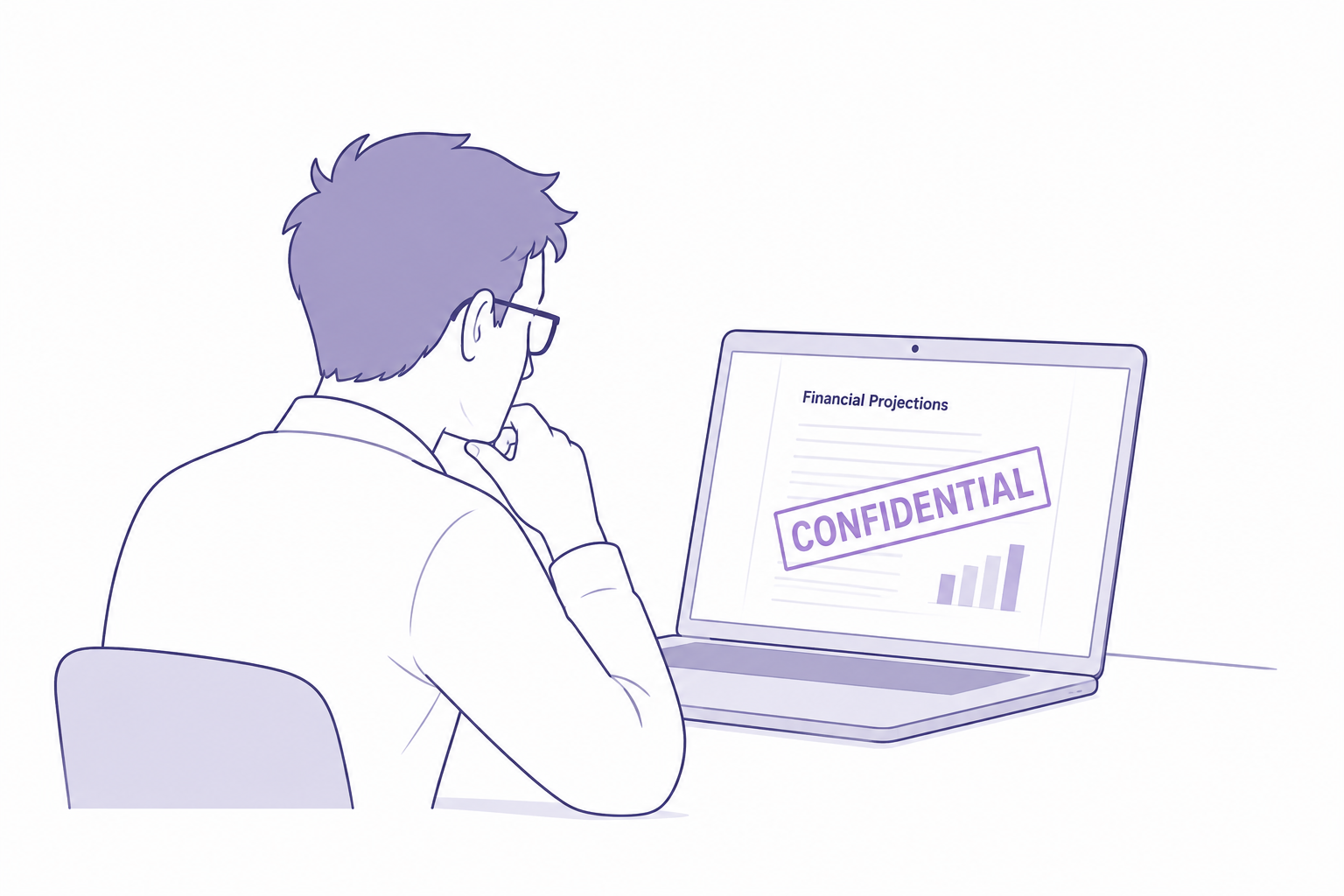
Without appropriate access management, confidential information can potentially reach the wrong audience. A VDR helps administrators establish a clearer framework for determining who can access specific secure documents.
Important capabilities to consider include:
- User permissions
- Group-based access
- Folder-level controls
- Activity monitoring
- Audit logs
- Data-center selection
- Controlled external access
These capabilities are particularly valuable when multiple organizations are involved in the same transaction.
2. Securely Share Secure Documents During Deals
The second major reason to choose a VDR is the ability to securely share sensitive information with external stakeholders.
Transactions frequently require organizations to provide large volumes of information to people outside the company. Email attachments can quickly become difficult to manage when documents are constantly being updated and redistributed.
A VDR provides a centralized environment where stakeholders can access the latest available information.
Consider a fundraising example.
A startup raising a Series A round may need to provide investors with:
- Pitch deck
- Financial statements
- Financial model
- Cap table
- Corporate documents
- Customer contracts
- Intellectual property records
- Employment agreements
- Previous financing documents
- Legal documentation
Instead of sending separate attachments to every investor, the company can organize these secure documents in a fundraising data room.
Investors can then review the information from one centralized location.
This approach can also make it easier for founders to manage multiple investors at the same time.
Secure Documents for M&A

M&A transactions are another major use case for VDRs.
A seller may need to share hundreds or thousands of secure documents during buyer due diligence. These documents can include financial statements, tax records, contracts, employee information, intellectual property, litigation records, and technology documentation.
A VDR provides a structured environment for this process.
For example:
| Transaction Area | Example Secure Documents |
|---|---|
| Corporate | Incorporation records, shareholder agreements |
| Financial | Financial statements, forecasts, models |
| Commercial | Customer and supplier contracts |
| Legal | Litigation and material agreements |
| HR | Employment and compensation records |
| IP | Patents, trademarks, IP assignments |
| Tax | Tax returns and assessments |
| Technology | Security and technology documentation |
Organizing these secure documents into logical folders allows authorized reviewers to navigate the transaction more efficiently.
3. Maintain Visibility Into Secure Documents
The third reason to choose a VDR is visibility.
Sharing confidential information is not only about preventing unauthorized access. Transaction teams may also need to understand what is happening inside the data room.
Activity analytics and audit logs can provide useful visibility into interactions with secure documents.
For example, during a competitive M&A process, a seller may have multiple potential buyers reviewing information. Understanding activity within the data room can provide transaction administrators with greater awareness of how the process is progressing.
Similarly, during fundraising, founders may want a centralized environment where investor activity can be managed alongside the information being shared.
This is another area where a VDR can provide functionality beyond basic cloud storage.
Secure Document Portal vs. Traditional File Sharing
A secure document portal designed for transactions differs from ordinary file-sharing systems because the workflow is centered around confidentiality and controlled external access.
| Feature | Basic File Sharing | VDR |
|---|---|---|
| File storage | Yes | Yes |
| Folder organization | Yes | Yes |
| Transaction workflows | Limited | Designed for deals |
| User permissions | Varies | Core functionality |
| Activity visibility | Limited | Available |
| Audit logs | Varies | Available |
| External stakeholders | Basic | Controlled |
| Data-room structure | No | Yes |
This distinction becomes particularly important when handling highly confidential secure documents.
Secure Documents Across Different Use Cases
A VDR isn’t limited to acquisitions. Organizations can use secure environments for many confidential workflows.
Common examples include:
- M&A transactions
- Fundraising
- Venture capital investment
- Private equity investment
- Due diligence
- Strategic partnerships
- Joint ventures
- Legal reviews
- Audits
- Corporate transactions
A company might use one data room for an acquisition and another for fundraising. The underlying principle remains the same: organize secure documents, control access, and provide authorized stakeholders with a structured review environment.
How DeelTrix Helps Manage Secure Documents
DeelTrix provides a virtual data room designed for confidential business workflows. Companies can organize secure documents into structured folders and provide controlled access to investors, buyers, advisors, lawyers, accountants, and other stakeholders.
For an M&A transaction, DeelTrix can be used to create a dedicated data room containing corporate, financial, legal, commercial, tax, HR, IP, and technology information.
For fundraising, founders can create an investor data room containing financial models, cap tables, pitch materials, contracts, and other investor documentation.
DeelTrix also provides features such as permissions, activity analytics, and audit logs to help administrators manage the information-sharing process.
Data Residency and Secure Documents
Data residency can also be an important consideration when selecting a VDR. Some organizations have requirements regarding where business information is stored.
DeelTrix gives customers the option to select a preferred data center location, helping organizations address applicable data residency requirements and internal information-management policies.
This can be particularly relevant for companies operating across multiple jurisdictions.
What Makes the Best VDR DeelTrix?
When comparing the best VDR DeelTrix with other solutions, companies should evaluate more than basic document storage.
Important considerations include:
- Security controls
- Permission management
- Ease of document organization
- Activity analytics
- Audit logs
- Data-center options
- Data residency support
- External user management
- Transaction usability
- Support for M&A
- Support for fundraising
- Support for due diligence
The right platform should make it straightforward to organize secure documents while giving administrators appropriate control over access and activity.
Final Thoughts
The need for secure documents continues to grow as companies conduct more complex transactions and collaborate with external stakeholders. M&A, fundraising, investment, due diligence, and strategic partnerships all require businesses to share sensitive information without losing control of it.
The three biggest reasons to choose a VDR are controlled access, secure information sharing, and activity visibility. Together, these capabilities provide a stronger framework for managing confidential transaction information.
DeelTrix brings these capabilities together in a dedicated virtual data room environment. Whether a company is preparing for an acquisition, raising capital, or conducting due diligence, it can use DeelTrix to organize secure documents, manage stakeholder access, and maintain visibility throughout the transaction.
For businesses looking beyond ordinary document portals, a transaction-focused VDR can provide the structure and controls needed to manage sensitive information more effectively. A well-designed VDR makes it easier to securely share information while keeping the transaction organized from preparation through completion.


FAQs

1. What is a VDR used for secure documents?
A virtual data room (VDR) is designed to help businesses store, organize, and share confidential information with authorized users. Companies commonly use VDRs for M&A, fundraising, due diligence, private equity transactions, audits, and strategic partnerships. A VDR provides a centralized environment where secure documents can be managed while administrators control user access.
2. Why should companies use a VDR instead of email to share secure documents?
Email is useful for communication, but managing large volumes of confidential files through email can become difficult. A VDR provides a centralized environment for secure documents, allowing teams to organize files into folders, manage permissions, monitor activity, and maintain a structured transaction workflow.
3. How does DeelTrix help protect secure documents?
DeelTrix provides a virtual data room environment where businesses can organize confidential information and control access for authorized users. Features such as permissions, activity analytics, and audit logs help organizations maintain greater visibility and control over their secure documents during transactions.
4. Can I use DeelTrix for M&A secure documents?
Yes. DeelTrix can be used to manage secure documents during mergers and acquisitions. Sellers can organize corporate records, financial statements, customer contracts, intellectual property, HR information, tax records, legal agreements, and other due diligence materials in a centralized data room.
5. Can a VDR be used to securely share documents with investors?
Yes. A VDR can provide investors with controlled access to confidential fundraising materials. Founders can organize financial statements, cap tables, financial models, customer information, legal documents, and other secure documents while managing access for individual investors and advisors.
6. Can multiple users access secure documents in DeelTrix?
Yes. DeelTrix can be used by multiple authorized participants during a transaction. Different users can receive appropriate access based on their role, helping organizations avoid giving every participant unrestricted access to all secure documents.
7. What types of secure documents can be stored in a VDR?
A VDR can be used for many types of confidential information, including:
- Financial statements
- Financial models
- Cap tables
- Customer contracts
- Supplier agreements
- Corporate records
- Intellectual property documents
- Employee agreements
- Tax documents
- Legal agreements
- Regulatory documents
- Technology and security documentation
- Transaction documents
The appropriate documents depend on the transaction and the organization’s requirements.
8. Do VDRs provide activity tracking for secure documents?
Many transaction-focused VDRs provide activity monitoring and audit capabilities. DeelTrix provides analytics and audit logs that can help administrators maintain visibility into activity within the data room. This can be useful when multiple investors, buyers, advisors, or other stakeholders are reviewing confidential information.
9. What should I look for when choosing a VDR for secure documents?
When evaluating a VDR, consider security controls, user permissions, document organization, activity analytics, audit logs, usability, data-center options, data residency requirements, and support for your transaction type. Businesses should select a platform that provides the appropriate combination of security, control, and ease of use for their workflow.
10. What are the benefits of using a secure document portal for transactions?
A secure document portal can provide a centralized environment for organizing confidential information, managing external access, monitoring activity, and supporting transaction workflows. This can be useful for M&A, fundraising, due diligence, private equity, venture capital, audits, and strategic partnerships.
11. Is DeelTrix secure?
Yes. DeelTrix is ISO certified, providing a security-focused environment for managing confidential information. You can learn more about the ISO/IEC 27001 standard.
DeelTrix also gives customers the option to select a preferred data center location, helping organizations address applicable data residency mandates and requirements.
12. What are data rooms used for?
Data rooms are used to securely organize, manage, and share confidential information with authorized stakeholders. They are commonly used for M&A, fundraising, due diligence, investments, audits, and other sensitive business processes.