Document Portals: How modern transactions needs more than just storage

Modern transactions involve a large volume of confidential information. Whether a company is raising capital, preparing for an acquisition, completing due diligence, or working with external advisors, teams need a reliable way to organize and share documents without losing control over sensitive information.
Document portals provide a centralized environment where authorized users can access important files and transaction materials. For deal teams, a secure virtual data room can function as a specialized secure document portal designed around confidentiality, permissions, collaboration, and transaction workflows.
DeelTrix provides a secure data-room environment that can be used as secure document portal across fundraising, M&A, due diligence, investment, and other confidential business processes.
What Are Document Portals?
Document portals are centralized online workspaces that allow organizations to store, organize, manage, and share files with specific users. They provide a structured alternative to relying on email attachments, scattered cloud folders, local storage, or multiple file-sharing services. Instead of distributing important documents individually, a business can place relevant information into one controlled online environment and give authorized stakeholders access according to their role.
This type of workspace is particularly useful when information needs to be shared outside the organization. Businesses regularly work with investors, buyers, sellers, lawyers, accountants, financial advisors, consultants, customers, suppliers, and strategic partners. Many of these relationships require access to confidential documents. A centralized system makes it easier to provide that access while maintaining greater control over who can view specific information.
For example, consider a company preparing for an acquisition. The company may need to provide a potential buyer with corporate records, financial statements, customer contracts, intellectual property documentation, employee agreements, tax records, insurance policies, technology information, and legal documents. Rather than sending hundreds of files through email, the company can organize everything into clearly labeled folders.
A typical structure could look like this:
- Corporate Information — incorporation records, shareholder agreements, board resolutions, and ownership information
- Financial Information — financial statements, forecasts, budgets, bank information, and financial models
- Commercial Information — customer contracts, supplier agreements, sales information, and partnerships
- Legal Information — litigation, material agreements, licenses, and regulatory documentation
- Intellectual Property — patents, trademarks, copyrights, software ownership, and IP assignments
- Human Resources — employment agreements, compensation information, benefits, and HR policies
- Tax Information — tax returns, filings, assessments, and correspondence
- Technology & Security — technology documentation, cybersecurity information, and security assessments
- Transaction Documents — term sheets, NDAs, purchase agreements, and closing materials
The buyer does not necessarily need access to every folder. A well-designed system allows administrators to determine which users can access particular information. For instance, a financial advisor might require access to financial records, while a legal advisor may primarily need corporate agreements, litigation information, and regulatory documentation.
This is one of the key differences between a transaction-focused workspace and ordinary file storage. The objective is not simply to keep files online. It is to create an organized environment where confidential information can be made available to the right people at the right time.
How Do Document Portals Work?

At a basic level, the process is straightforward. An organization creates a workspace, uploads relevant files, organizes them into folders, and invites authorized users. Administrators can then manage access as the transaction progresses.
For a fundraising round, for example, a startup could prepare folders containing its pitch deck, capitalization table, financial model, corporate records, customer contracts, intellectual property information, and previous financing documents. Investors can then review the materials without the founder having to send individual attachments repeatedly.
The same approach can be applied to mergers and acquisitions, private equity investments, venture capital transactions, due diligence, audits, strategic partnerships, and other confidential workflows.
Why Are They Useful for Transactions?
Transactions often involve large quantities of information and multiple stakeholders. Without proper organization, teams can spend significant time searching for documents, answering repeated requests, identifying the latest versions, and determining who should receive sensitive information.
A centralized workspace can help address these problems by providing:
- Centralized information: Important files are maintained in one location.
- Structured organization: Documents can be categorized into logical folders.
- Controlled access: Administrators can determine which users receive access.
- Improved collaboration: Multiple authorized stakeholders can work from the same information repository.
- Activity visibility: Teams can monitor relevant activity within the workspace.
- Auditability: Transaction teams can maintain records of activity where supported.
- Version management: Updated files can be organized more systematically.
- Faster due diligence: Reviewers can find information without repeatedly requesting files.
For example, during an M&A transaction, a buyer might submit a list of 200 information requests. Instead of responding to every request through separate email attachments, the seller can organize the relevant information in a centralized environment and direct authorized reviewers to the appropriate folders.
Secure Document Portal vs. Email Attachments
Email is useful for communication, but it becomes difficult to manage as the number and sensitivity of files increase. Multiple recipients may receive different versions of the same document, attachments can become difficult to track, and sensitive information may be distributed more widely than intended.
A centralized approach provides a clearer structure:
| Traditional Sharing | Centralized Transaction Workspace |
|---|---|
| Files distributed through emails | Files maintained centrally |
| Multiple document versions | Organized document versions |
| Difficult to track access | Better access management |
| Scattered information | Structured folders |
| Repeated file requests | Centralized availability |
| Limited transaction visibility | Activity and audit capabilities |
How DeelTrix Fits Into This Workflow

DeelTrix provides a virtual data room environment designed for confidential business transactions. Companies can organize important documents into structured folders and provide access to investors, buyers, advisors, lawyers, accountants, and other authorized participants.
For an acquisition, DeelTrix can be used to build a dedicated M&A data room containing financial, legal, commercial, corporate, HR, tax, intellectual property, and technology information. For fundraising, the same platform can provide investors with controlled access to the company’s financial and business documentation.
The platform can also support user permissions, activity analytics, and audit logs, helping administrators maintain visibility throughout the transaction.
Data-center selection can also be important for organizations with specific data residency requirements. DeelTrix provides the option to select a preferred data center location to help organizations address applicable data residency mandates.
Ultimately, the value of this approach is not simply having somewhere to upload files. It is about creating an organized and controlled environment for exchanging sensitive information. For businesses involved in M&A, fundraising, due diligence, investment, or strategic transactions, a secure virtual data room can make the process more structured, manageable, and efficient.
Document Portals vs. Traditional File Sharing
Traditional file-sharing methods can become difficult to manage when a transaction involves many users and documents. Email attachments can create multiple versions of the same file, while ordinary cloud folders may not provide the transaction-specific controls required for sensitive deals.
| Capability | Email/File Sharing | Deal-Focused Document Portals |
|---|---|---|
| Centralized documents | Limited | Yes |
| Structured folders | Basic | Yes |
| User permissions | Limited | Granular |
| Transaction organization | Limited | Designed for deals |
| Activity visibility | Limited | Available |
| Audit logs | Often limited | Available |
| External stakeholder access | Possible | Controlled |
| Data-room workflow | No | Yes |
This is where document portals such as a DeelTrix data room can provide additional value.
How DeelTrix Works as Document Portals for M&A
Mergers and acquisitions are one of the most common use cases for secure document portals. A seller may need to provide thousands of documents to a potential buyer while maintaining control over confidential information.
For example, imagine a software company preparing for a $50 million acquisition. Its transaction team may need to organize:
- Corporate documents
- Financial statements
- Customer contracts
- Supplier agreements
- Employee agreements
- Intellectual property records
- Tax documentation
- Litigation information
- Technology documentation
- Cybersecurity information
With DeelTrix, these materials can be organized into a dedicated data room and shared with authorized buyers, lawyers, accountants, and advisors.
The result is a centralized set of document portals for the transaction instead of dozens of disconnected email conversations.
Document Portals for Fundraising
Fundraising is another important application for document portals. Startups frequently need to share sensitive information with potential investors during due diligence.
A startup raising a Series A round could create folders such as:
- Corporate Documents
- Cap Table
- Financials
- Business Information
- Customers
- Intellectual Property
- HR
- Legal
- Tax
- Fundraising Documents
Investors can then review the information they need through controlled access.
DeelTrix can function as one of these document portals, giving founders a centralized location for investor documentation while avoiding the need to repeatedly send sensitive attachments.
Document Portals for Due Diligence
Due diligence often requires information from multiple departments. Financial teams provide financial records, legal teams provide contracts, HR provides employee information, and technology teams provide technical and security documentation.
Using document portals allows all of these materials to be brought together into one structured environment.
A buyer conducting due diligence on a manufacturing company, for example, might need access to:
- Financial statements
- Factory leases
- Equipment records
- Supplier contracts
- Customer agreements
- Employee records
- Environmental documentation
- Insurance policies
- Tax filings
A centralized DeelTrix data room can help the transaction team organize these documents and control who can access each category.
Document Portals for Private Equity

Private equity firms can use document portals across both investment and portfolio-company workflows.
For example, during a private equity acquisition, the deal team may use a data room to review a target company’s:
- Financial performance
- Debt
- Customer concentration
- Management structure
- Legal obligations
- Intellectual property
- Operational information
After the investment, similar document portals can be useful for sharing board materials, financial reports, transaction documents, and other confidential information with approved stakeholders.
Document Portals for Investment Banking
Investment bankers frequently coordinate information between sellers, buyers, lawyers, accountants, and other advisors.
A secure data room can help bankers create a centralized document environment for the transaction.
For example, an investment bank advising a company on a sale could use DeelTrix to organize seller documentation and provide controlled access to multiple prospective buyers.
This makes document portals useful not only for storing files but also for coordinating complex transaction workflows.
Document Portals for Legal Teams
Law firms and corporate legal departments can also benefit from document portals when managing confidential transaction documents.
Legal teams may need to review:
- Contracts
- Corporate records
- Litigation
- Regulatory documentation
- Intellectual property
- Employment agreements
- Transaction agreements
Instead of managing separate email chains, legal teams can use a secure data room to centralize relevant information.
Document Portals for Strategic Partnerships
Not every transaction involves an acquisition or investment. Companies may also need secure document portals when negotiating strategic partnerships, joint ventures, licensing arrangements, or other commercial relationships.
For example, a technology company entering a strategic partnership with an enterprise customer could use a data room to share confidential technical documentation, commercial agreements, security information, and business materials with authorized stakeholders.
Document Portals for Controlled Access
One of the biggest advantages of deal-focused document portals is access control.
Different participants may require different information. A buyer’s financial advisor may need access to financial documents, while a legal advisor may need contracts and corporate records.
DeelTrix can help administrators organize access around the requirements of the transaction rather than giving every participant unrestricted access to the entire document collection.
Document Portals and Activity Visibility
Transaction teams often need visibility into activity within a data room. DeelTrix provides analytics and audit-log functionality that can help administrators understand activity associated with shared information.
This can be useful when managing a competitive sale process or monitoring investor engagement during fundraising.
For example, if several potential buyers are reviewing the same transaction, the seller’s advisors can maintain greater visibility into activity within the data room.
Data Residency and Security
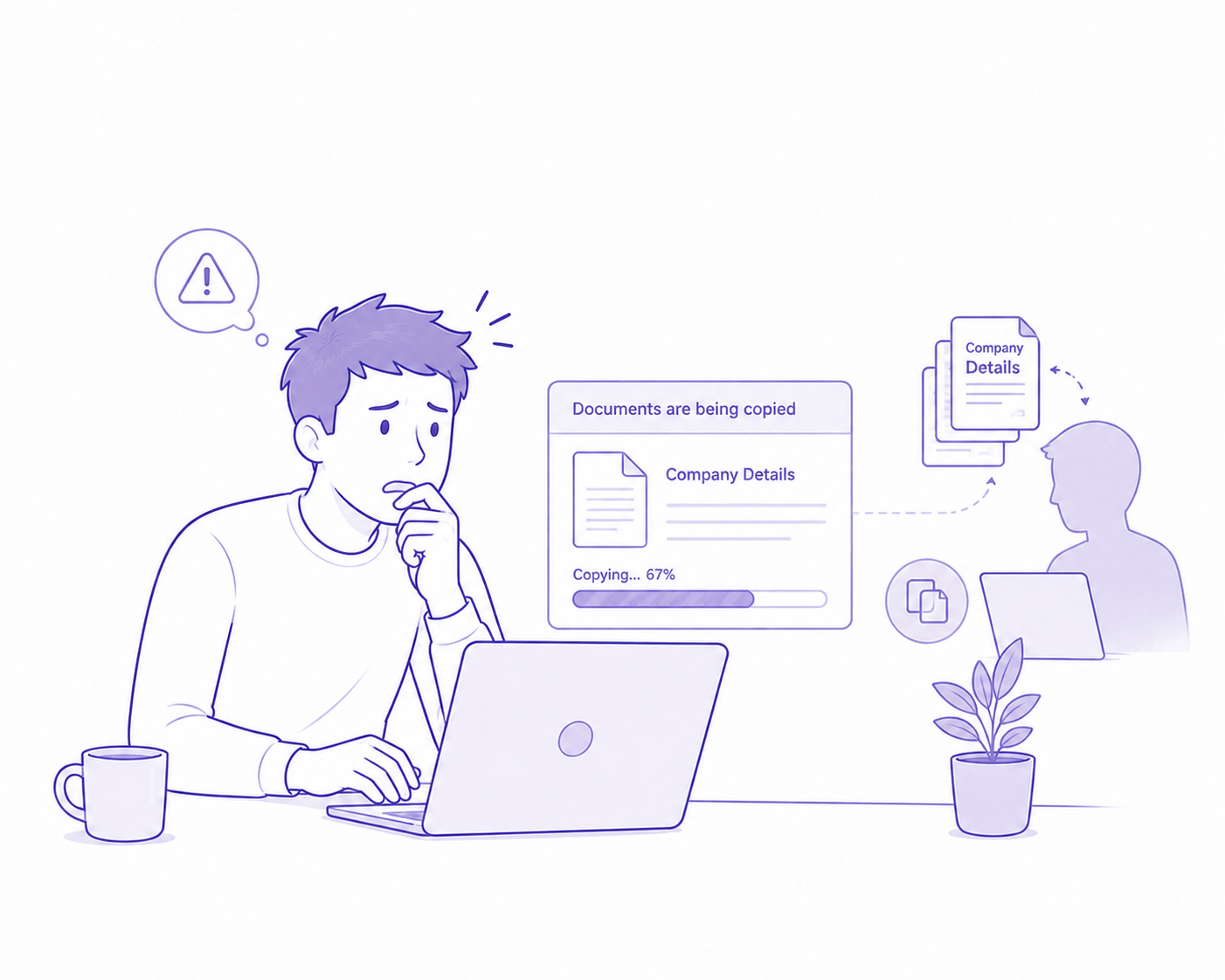
Confidential transactions can involve information that is subject to organizational security requirements or data residency considerations.
DeelTrix gives customers the option to select a preferred data center location, helping organizations address applicable data residency requirements.
This makes data-center selection another important consideration when evaluating document portals for confidential business workflows.
Common Use Cases for DeelTrix Document Portals
| Use Case | How DeelTrix Helps |
|---|---|
| M&A | Organize and share acquisition due diligence materials |
| Fundraising | Provide investors with controlled access to company information |
| Due diligence | Centralize financial, legal, commercial, and operational documents |
| Private Equity | Support acquisition and investment workflows |
| Venture Capital | Manage investor document sharing |
| Investment Banking | Coordinate transaction documents across stakeholders |
| Legal | Centralize confidential legal and transaction materials |
| Strategic Partnerships | Share sensitive commercial and technical information |
| Audits | Provide controlled access to supporting documentation |
Why Choose DeelTrix for Document Portals?
The value of document portals depends on how effectively they combine organization, security, and usability. DeelTrix is designed to provide a centralized environment for confidential documents while supporting transaction-specific workflows.
Key benefits include:
- Centralized document organization
- Secure external document sharing
- User permission management
- Activity analytics
- Audit logs
- Data-center selection
- Support for M&A workflows
- Fundraising data rooms
- Due diligence workflows
- Controlled stakeholder access
Instead of using separate systems for document storage, sharing, and transaction management, companies can use DeelTrix as a dedicated data-room environment.
Final Thoughts
Document portals are becoming increasingly valuable as businesses manage more complex transactions and increasingly distributed teams. M&A, fundraising, due diligence, private equity, venture capital, investment banking, legal reviews, and strategic partnerships all require controlled access to sensitive information.
DeelTrix transforms the traditional concept of document portals into a secure virtual data room designed for confidential business workflows. By combining structured document organization, access management, analytics, audit logs, and data-center selection, DeelTrix helps organizations maintain greater control while sharing important information with authorized stakeholders.
Whether you are preparing a company for sale, raising capital, conducting due diligence, or managing another confidential transaction, using specialized document portals can make the process more organized and efficient.
For transaction teams looking for secure document portals for deals, DeelTrix provides a centralized environment where confidential documents can be organized, shared, monitored, and managed throughout the transaction lifecycle.

FAQ 1: What are document portals?
Document portals are secure online environments used to organize, store, and share documents with selected users. They are particularly useful when businesses need to provide external stakeholders with controlled access to confidential information.
FAQ 2: How are document portals different from cloud storage?
Traditional cloud storage is generally designed for everyday file storage and collaboration. Deal-focused document portals provide a more structured environment for confidential transactions, including controlled access, organized folders, activity visibility, and audit capabilities.
FAQ 3: What are document portals used for?
Document portals can be used for mergers and acquisitions, fundraising, due diligence, private equity investments, venture capital transactions, audits, strategic partnerships, legal reviews, and other situations requiring controlled document sharing.
FAQ 4: Can DeelTrix be used as a document portal?
Yes. DeelTrix can function as a secure document portal for businesses that need to organize and share confidential information with investors, buyers, advisors, legal teams, and other authorized stakeholders.
FAQ 5: Can document portals be used for M&A?
Yes. Document portals are commonly used during M&A transactions to organize corporate, financial, legal, commercial, tax, HR, intellectual property, and other due diligence documents.
FAQ 6: What documents are typically stored in an M&A document portal?
An M&A document portal may contain financial statements, customer contracts, supplier agreements, corporate records, tax documents, employee agreements, intellectual property records, litigation documents, licenses, insurance information, and transaction agreements.
FAQ 7: Can DeelTrix support M&A transactions?
Yes. DeelTrix can be used to create a centralized data room for M&A transactions where sellers, buyers, investment bankers, lawyers, accountants, and other authorized participants can access relevant transaction information.
FAQ 8: What is a virtual data room?
A virtual data room is a secure online environment designed for storing and sharing confidential information during transactions and other sensitive business processes. It typically provides stronger access and activity controls than basic file-sharing tools.
FAQ 9: How do document portals help with due diligence?
Document portals centralize the information required for due diligence, allowing authorized reviewers to locate financial, legal, commercial, operational, and other documents from one structured environment.
FAQ 10: Can document portals be used for fundraising?
Yes. Startups can use document portals to provide investors with controlled access to financial statements, cap tables, pitch decks, contracts, intellectual property records, and other fundraising information.
FAQ 11: What is an investor document portal?
An investor document portal is a secure workspace where companies can provide potential investors with access to information required to evaluate an investment opportunity.
FAQ 12: Can DeelTrix be used as an investor document portal?
Yes. DeelTrix allows companies to organize fundraising documents and provide controlled access to investors and authorized advisors through a centralized data-room environment.
FAQ 13: Can multiple investors use the same document portal?
Yes. A company can use a centralized data room to manage access for multiple investors while applying appropriate permissions based on the requirements of the fundraising process.
FAQ 14: Can document portals control user access?
Yes. Access management is an important feature of secure document portals. Administrators can control which users or groups can access particular information according to their role.
FAQ 15: Why are permissions important in document portals?
Permissions help prevent confidential information from being unnecessarily exposed. For example, a company may want financial advisors to access financial documents while restricting other sensitive folders.
FAQ 16: Do document portals provide activity tracking?
Many transaction-focused document portals provide activity tracking. DeelTrix provides analytics and audit-log functionality to give administrators greater visibility into activity within the data room.
FAQ 17: What are audit logs in a document portal?
Audit logs provide records of activity within a platform. They can help administrators maintain visibility into data-room usage and support oversight during confidential transactions.
FAQ 18: Can document portals help organize large numbers of files?
Yes. A major advantage of document portals is the ability to organize large collections of documents into folders and categories. This can make it easier for stakeholders to find the information they need.
FAQ 19: How should an M&A document portal be organized?
A typical M&A structure can include Corporate, Financial, Tax, Legal, Commercial, Intellectual Property, HR, Technology, Assets, Regulatory, and Transaction Documents folders.
FAQ 20: What is the benefit of using document portals instead of email?
Document portals can reduce reliance on email attachments by providing one centralized location for confidential documents. This can make it easier to manage versions, permissions, and access to sensitive information.
FAQ 21: Can document portals help reduce duplicate documents?
Yes. Centralizing documents in one data room can reduce the need to repeatedly distribute the same files through separate emails and storage locations.
FAQ 22: Can document portals be used by investment bankers?
Yes. Investment bankers can use document portals to coordinate transaction information between sellers, buyers, lawyers, accountants, and other advisors.
FAQ 23: Can law firms use document portals?
Yes. Law firms can use secure document portals to organize confidential contracts, corporate records, litigation documents, intellectual property materials, and transaction documentation.
FAQ 24: Can private equity firms use document portals?
Yes. Private equity firms can use document portals during acquisition due diligence, investment evaluation, portfolio-company workflows, and other confidential processes.
FAQ 25: Can venture capital firms use document portals?
Yes. Venture capital investors can use document portals to review fundraising documentation, financial information, ownership records, contracts, and other company materials.
FAQ 26: Can document portals be used for strategic partnerships?
Yes. Companies can use document portals to securely share commercial, technical, legal, and operational information during strategic partnerships and joint ventures.
FAQ 27: Can document portals be used for audits?
Yes. Organizations can use document portals to provide auditors with controlled access to financial records, supporting documentation, contracts, compliance materials, and other relevant information.
FAQ 28: What is the difference between document portals and virtual data rooms?
Document portals are a broad category of centralized document-sharing environments. A virtual data room is a specialized type of document portal designed for confidential transactions such as M&A, fundraising, and due diligence.
FAQ 29: Can DeelTrix replace email-based document sharing?
DeelTrix can provide an alternative to repeatedly distributing confidential documents through email by giving authorized stakeholders access to a centralized data-room environment.
FAQ 30: Can document portals support cross-border transactions?
Yes. Document portals can support teams working across multiple countries by providing centralized access to transaction documentation. Organizations should also consider applicable security, privacy, and data residency requirements.
FAQ 31: Does DeelTrix provide data-center location options?
Yes. DeelTrix gives customers the option to select a preferred data center location, helping organizations address applicable data residency requirements and internal information-management policies.
FAQ 32: Is DeelTrix secure?
Yes. DeelTrix is ISO certified, providing a security-focused environment for managing confidential information. You can learn more about the ISO/IEC 27001 standard from the International Organization for Standardization.
DeelTrix also gives customers the option to select a preferred data center location to help meet applicable data residency mandates.
FAQ 33: What are the data rooms used for?
Data rooms are used to securely organize, manage, and share confidential information with authorized stakeholders. Common uses include M&A, fundraising, due diligence, investments, audits, and other sensitive business processes.
Check out this video to explore why data rooms are crucial.
FAQ 34: Can DeelTrix document portals be used for sell-side transactions?
Yes. Sellers can use DeelTrix to prepare corporate and due diligence information before giving potential buyers access to the transaction materials.
FAQ 35: Can DeelTrix document portals be used for buy-side due diligence?
Yes. Buyers and their advisors can use a DeelTrix data room to access and review information made available by the target company during due diligence.
FAQ 36: What makes a good document portal for deals?
A good deal-focused document portal should make confidential information easy to organize while providing appropriate access controls, activity visibility, audit capabilities, and a straightforward experience for authorized users.
FAQ 37: How can document portals improve M&A efficiency?
By centralizing transaction documents, document portals can reduce time spent searching for files, managing email attachments, responding to repeated requests, and distributing different versions of documents.
FAQ 38: Can document portals help manage confidential documents?
Yes. Secure document portals provide a controlled environment for sharing confidential documents with selected users instead of making sensitive information broadly accessible.
FAQ 39: Can document portals be used for multiple transaction types?
Yes. The same platform can support different workflows, including M&A, fundraising, due diligence, private equity, venture capital, strategic partnerships, audits, and legal processes.
FAQ 40: Can DeelTrix document portals be customized for different deals?
Yes. Teams can structure their DeelTrix data room around the specific transaction and organize documents into folders appropriate for their particular workflow.
FAQ 41: How do document portals help investors review a company?
A structured document portal gives investors a centralized location to review important company information. Clear folders and controlled access can make the investor review process more organized.
FAQ 42: Can document portals help sellers prepare for buyer questions?
Yes. Preparing documents in advance allows sellers to organize commonly requested information before buyer due diligence begins, potentially reducing delays caused by repeated document requests.
FAQ 43: Should sensitive documents be separated in a document portal?
In many transactions, yes. Sensitive documents can be organized into restricted folders or access groups where appropriate, depending on the company’s confidentiality requirements and applicable obligations.
FAQ 44: How does DeelTrix help manage external stakeholders?
DeelTrix provides a centralized environment where organizations can manage access for external stakeholders such as buyers, investors, lawyers, accountants, bankers, consultants, and other authorized participants.
FAQ 45: Are document portals useful for startups?
Yes. Startups can use document portals for fundraising, investor due diligence, strategic partnerships, audits, and other situations where confidential company information needs to be shared externally.
FAQ 46: What should a startup include in its investor document portal?
A startup may include its pitch deck, cap table, financial statements, financial model, corporate records, customer contracts, intellectual property documentation, legal agreements, employee information, and previous financing documents.
FAQ 47: What should companies consider when choosing document portals?
Companies should consider security, permissions, document organization, activity monitoring, audit logs, usability, data-center options, data residency requirements, and whether the platform supports the specific transaction workflow.
FAQ 48: Can document portals help maintain a single source of truth?
Yes. Keeping transaction documents in a centralized data room can help stakeholders work from the same organized collection of information rather than relying on multiple email attachments and disconnected storage locations.
FAQ 49: Are document portals useful throughout the entire transaction?
Yes. Document portals can support preparation before a transaction, active due diligence, negotiations, document updates, stakeholder collaboration, and post-transaction record management.
FAQ 50: Why use DeelTrix as a document portal for deals?
DeelTrix combines secure document organization, controlled stakeholder access, activity analytics, audit logs, and data-center selection in a centralized virtual data-room environment. This makes it useful for M&A, fundraising, due diligence, investment, and other confidential business workflows where teams need to share information while maintaining greater control over sensitive documents.