Fundraising Documents: Quick Outlook
| Document Name | Purpose | Importance Level |
|---|---|---|
| Pitch Deck | Introduce business & vision | High |
| Executive Summary | Snapshot of business | High |
| Financial Model | Forecast growth & returns | High |
| Cap Table | Ownership structure | High |
| Business Plan | Detailed strategy | High |
| Legal Documents | Compliance & structure | Critical |
| Market Analysis | Validate opportunity | High |
| Traction Data | Show progress | High |
| Product Documentation | Explain product | Medium |
| Investor Updates | Build trust | Medium |
Fundraising is not just about pitching an idea—it’s about proving credibility, clarity, and scalability through well-structured Fundraising Documents. Investors today expect transparency, data-backed insights, and organized documentation before they even consider engaging in deeper discussions. Without the right materials in place, even the most promising startups can lose momentum during critical stages of capital raising.
Modern fundraising has also evolved alongside digital infrastructure. Founders now rely heavily on Virtual Data Room platforms to store, organize, and securely share Fundraising Documents with investors across geographies. Tools like DeelTrix simplify this process by combining security, analytics, and collaboration into one unified ecosystem.
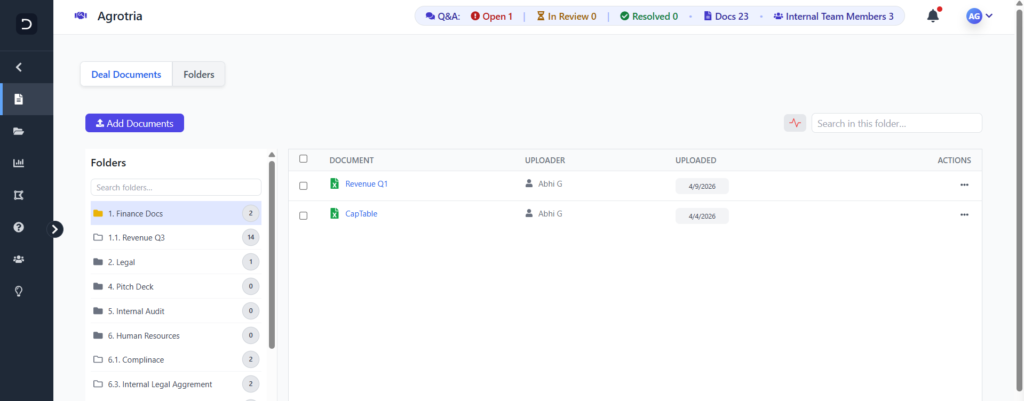
📂 Pre-Seed Fundraising Data Room Structure
At the Pre-Seed stage, your goal is clarity and belief—not heavy data. Your Fundraising Documents should focus on vision, problem-solution fit, and early validation. Avoid overloading—investors here want conviction, not complexity.
📁 01. Company Overview
This is the first folder every investor will open. It should immediately communicate what your startup does and why it matters.
📂 Vision & Introduction
- Pitch Deck (latest version)
- Executive Summary (1–2 pages)
- Elevator Pitch (short written version)
📂 Founding Team
- Founder Bios (with LinkedIn links)
- Key Team Members Overview
- Capabilities & Roles Breakdown
📂 Company Snapshot
- Company Mission & Vision Statement
- Problem Statement Document
- Solution Overview
These Fundraising Documents set the narrative. Everything else should align with this story.
📁 02. Market Research
Investors at this stage care deeply about market size and opportunity, even more than traction.
📂 Market Size
- TAM, SAM, SOM Analysis
- Market Size Calculation Sheet
- Industry Growth Reports
📂 Industry Insights
- Industry Trends Document
- Key Market Drivers
- Future Projections
📂 Competition
- Competitor Analysis
- Competitive Positioning Matrix
- Differentiation Breakdown
Strong Fundraising Documents here show that you’re not just building a product—you understand the market deeply.
📁 03. Product
At Pre-Seed, your product might be early—but you still need to demonstrate direction and clarity.
📂 MVP / Prototype
- Product Demo (video or Loom link)
- Screenshots / UI Walkthrough
- MVP Explanation Document
📂 Roadmap
- Product Roadmap (next 6–12 months)
- Feature Pipeline
- Development Milestones
📂 Technology Overview
- Tech Stack Overview
- Architecture Diagram (if available)
- Scalability Vision
These Fundraising Documents help investors visualize what you’re building—even if it’s still evolving.
📁 04. Traction (If Any)
Not all Pre-Seed startups have traction—but if you do, highlight it clearly.
📂 Early Metrics
- User Signups
- Beta Users Data
- Engagement Metrics
📂 Validation
- Customer Feedback
- Testimonials
- Pilot Results
📂 Partnerships
- Early Partnerships
- LOIs (Letters of Intent)
Even small traction can significantly strengthen your Fundraising Documents at this stage.
📁 05. Financials (Basic)
At Pre-Seed, investors don’t expect perfection—but they expect logic.
📂 Financial Model
- Revenue Projection (3 years)
- Cost Structure
- Burn Rate Estimate
📂 Assumptions
- Key Financial Assumptions
- Pricing Model
- Revenue Streams Explanation
📂 Fund Utilization
- Use of Funds Breakdown
- Hiring Plan
- Budget Allocation
Keep these Fundraising Documents simple but believable. Overcomplication here can backfire.
📁 06. Legal Basics
Even at an early stage, legal clarity builds trust.
📂 Company Formation
- Certificate of Incorporation
- Company Registration Docs
📂 Founders Agreement
- Equity Split Agreement
- Roles & Responsibilities
📂 IP (If Any)
- Trademark Filings
- Patent Applications
Incomplete or messy legal Fundraising Documents can slow down investor decisions.
📁 07. Cap Table
Transparency in ownership is critical—even early on.
📂 Ownership Structure
- Cap Table Sheet
- Founder Equity Split
📂 ESOP (If Created)
- ESOP Pool Details
- Allocation Plan
This is one of the most sensitive Fundraising Documents, so always keep it accurate and updated.
📁 08. Fundraising Info
This folder directly answers investor questions about the round.
📂 Round Details
- Fundraising Ask
- Valuation (if decided)
- Round Type (SAFE, Equity, etc.)
📂 Investor Material
- Investment Memo (optional)
- FAQ for Investors
These Fundraising Documents reduce back-and-forth and make your process smoother.
📁 09. Data Room Index
This is often ignored—but highly valuable.
📂 Navigation Guide
- Folder Structure Overview
- Document Index (with links)
When using a Virtual Data Room, this improves investor experience significantly and keeps things professional.
📂 Seed Fundraising Data Room Structure (Detailed)
At this stage, your Fundraising Documents should answer one core question:
“Is this startup working—and can it scale?”
📁 01. Company Overview
This still matters—but now it must align tightly with real data.
📂 Vision & Positioning
- Updated Pitch Deck (with traction slides)
- Executive Summary (updated with metrics)
- Elevator Pitch (refined narrative)
📂 Team
- Founder Bios (updated achievements)
- Key Hires (recent additions)
- Hiring Plan (next 6–12 months)
📂 Company Snapshot
- Mission & Vision
- Problem-Solution Fit (validated)
- Unique Value Proposition
At Seed, these Fundraising Documents must reflect evolution—not just ideas.
📁 02. Traction & Metrics (Core Focus)
This is the most important folder at this stage.
📂 Growth Metrics
- Monthly Active Users (MAU)
- Revenue Growth (MoM / QoQ)
- Customer Acquisition Trends
📂 Product Engagement
- Retention Rates
- Churn Analysis
- Session / Usage Data
📂 Sales Performance
- Conversion Rates
- Funnel Metrics
- Pipeline Overview
Strong Fundraising Documents here turn investor conversations from “why” to “how fast.”
📁 03. Financials (Detailed)
Now investors expect structured and realistic financial visibility.
📂 Historical Financials
- Profit & Loss Statement
- Cash Flow Statement
- Balance Sheet (if applicable)
📂 Financial Model
- 3–5 Year Projections
- Revenue Forecasts
- Expense Breakdown
📂 Unit Economics
- CAC (Customer Acquisition Cost)
- LTV (Lifetime Value)
- Gross Margins
📂 Fund Utilization
- Use of Funds Plan
- Hiring Budget
- Marketing Spend Allocation
These Fundraising Documents should be internally consistent—investors will test assumptions.
📁 04. Cap Table & Ownership
This becomes more complex at Seed stage.
📂 Cap Table
- Updated Cap Table
- Previous Round Details
- Convertible Notes / SAFE Details
📂 ESOP
- ESOP Pool Structure
- Allocation Plan
- Vesting Schedule
Clean and transparent Fundraising Documents here reduce friction in due diligence.
📁 05. Product & Technology
Now your product must show maturity and direction.
📂 Product Overview
- Product Demo (updated version)
- Feature Breakdown
- Product Differentiation
📂 Technology
- Tech Stack Details
- Architecture Diagram
- Scalability Plan
📂 Roadmap
- Product Roadmap (12–18 months)
- Upcoming Features
- Innovation Pipeline
These Fundraising Documents should demonstrate that your product can scale with demand.
📁 06. Market & Competition
At Seed, your market understanding must be sharper and data-backed.
📂 Market Analysis
- TAM, SAM, SOM (refined)
- Market Segmentation
- Target Customer Profiles
📂 Competitive Landscape
- Competitor Benchmarking
- Market Positioning
- SWOT Analysis
📂 Go-To-Market Strategy
- GTM Strategy Document
- Distribution Channels
- Pricing Strategy
Strong Fundraising Documents here show you know how to win—not just enter.
📁 07. Legal & Compliance
Due diligence starts getting serious here.
📂 Corporate Documents
- Certificate of Incorporation
- Shareholder Agreements
- Board Resolutions
📂 Contracts
- Vendor Agreements
- Client Contracts
- Partnership Agreements
📂 Intellectual Property
- Trademarks
- Patents (if any)
- Licensing Agreements
These Fundraising Documents are critical in any VDR for Fundraising or early VDR for M&A preparation.
📁 08. Fundraising Details
Now your round needs clarity and structure.
📂 Round Information
- Fundraising Ask
- Valuation Range
- Instrument Type (Equity / SAFE / Convertible)
📂 Investor Materials
- Investment Memo
- FAQs for Investors
- Previous Investor Updates
Clear Fundraising Documents reduce unnecessary back-and-forth and speed up decisions.
📁 09. Operations & Execution
Execution capability becomes a key evaluation factor.
📂 Business Operations
- Operating Model
- Key Processes
- KPIs Tracking
📂 Hiring & Org Structure
- Org Chart
- Hiring Plan
- Key Roles to Fill
📂 Partnerships
- Strategic Partnerships
- Channel Partnerships
- Integration Partners
These Fundraising Documents show that your company can actually execute at scale.
📁 10. Data Room Index & Navigation
Now this becomes essential—not optional.
📂 Index
- Master Document List
- Folder Structure Overview
📂 Access Control Guide
- Permission Levels
- Document Access Notes
Inside a Virtual Data Room, this ensures investors don’t get lost and improves engagement quality.
📂 Series A Fundraising Data Room Structure
(using a Virtual Data Room like DeelTrix)
📁 01. Company Overview
📂 Vision & Positioning
- Pitch Deck (Series A version)
- Executive Summary
- Company Narrative
📂 Leadership Team
- Founder Bios
- Leadership Team Profiles
- Hiring Plan
📂 Company Snapshot
- Mission & Vision
- Business Model Overview
- Value Proposition
📁 02. Traction & KPIs
📂 Revenue Metrics
- ARR / MRR Breakdown
- Revenue Growth Reports
- Revenue Segmentation
📂 Customer Metrics
- Customer Acquisition Data
- Retention & Churn Reports
- Cohort Analysis
📂 Sales Metrics
- Sales Pipeline
- Conversion Rates
- Deal Size Analysis
📁 03. Financials
📂 Historical Financials
- Profit & Loss Statements
- Cash Flow Statements
- Balance Sheets
📂 Financial Model
- 3–5 Year Forecast
- Revenue Projections
- Expense Forecast
📂 Unit Economics
- CAC Analysis
- LTV Analysis
- Contribution Margins
📂 Budget & Planning
- Annual Budget
- Department-wise Allocation
- Burn Rate Analysis
📁 04. Cap Table & Securities
📂 Cap Table
- Current Cap Table
- Historical Cap Table
📂 Investment Instruments
- SAFE / Convertible Notes
- Equity Agreements
📂 ESOP
- ESOP Pool Details
- Vesting Schedules
📁 05. Product & Technology
📂 Product Overview
- Product Demo
- Feature Documentation
- Product Differentiation
📂 Technology
- Architecture Diagram
- Tech Stack Details
- Security Infrastructure
📂 Roadmap
- Product Roadmap
- Feature Pipeline
- Innovation Plan
📁 06. Market & GTM
📂 Market Analysis
- TAM / SAM / SOM
- Market Segmentation
- Industry Reports
📂 Competition
- Competitor Benchmarking
- Positioning Matrix
- SWOT Analysis
📂 Go-To-Market
- GTM Strategy
- Sales Strategy
- Pricing Strategy
📁 07. Legal & Compliance
📂 Corporate Documents
- Incorporation Docs
- Shareholder Agreements
- Board Resolutions
📂 Contracts
- Customer Agreements
- Vendor Contracts
- Partnership Agreements
📂 Compliance
- Regulatory Filings
- Licenses
- Certifications
📁 08. Operations
📂 Business Operations
- Operating Model
- SOPs
- KPIs
📂 Organization
- Org Chart
- Department Structure
- Hiring Plan
📂 Partnerships
- Strategic Partnerships
- Channel Partnerships
📁 09. Fundraising
📂 Round Details
- Fundraising Ask
- Valuation
- Round Structure
📂 Investor Materials
- Investment Memo
- Investor FAQs
- Previous Updates
📁 10. Data Room Index
📂 Index
- Master Document List
- Folder Structure
📂 Access Control
- Permissions
- Access Notes
📂 Series B / Growth Stage Fundraising Data Room Structure
(using a Virtual Data Room like DeelTrix)
📁 01. Company Overview
📂 Strategic Overview
- Growth Pitch Deck (Series B version)
- Executive Summary
- Company Evolution Narrative
📂 Leadership & Management
- Leadership Team Profiles
- Board Members
- Organizational Leadership Structure
📂 Company Snapshot
- Business Model
- Revenue Streams
- Strategic Vision
📁 02. Traction & Advanced KPIs
📂 Revenue Metrics
- ARR / MRR (Detailed Breakdown)
- Revenue Growth by Segment
- Geographic Revenue Split
📂 Customer Metrics
- Cohort Analysis
- Retention & Churn (Advanced)
- Customer Segmentation
📂 Sales Metrics
- Sales Funnel Analytics
- Pipeline Forecast
- Deal Velocity
📂 Product Metrics
- Feature Adoption Rates
- Usage Analytics
- Customer Engagement Data
📁 03. Financials (Advanced)
📂 Historical Financials
- Audited Financial Statements
- Profit & Loss
- Cash Flow
- Balance Sheet
📂 Financial Model
- Detailed 5-Year Forecast
- Scenario Analysis
- Sensitivity Analysis
📂 Unit Economics
- CAC Payback Period
- LTV / CAC Ratio
- Contribution Margins
📂 Department Budgets
- Sales Budget
- Marketing Budget
- Operations Budget
📁 04. Cap Table & Investments
📂 Cap Table
- Current Cap Table
- Fully Diluted Cap Table
📂 Investment History
- Previous Rounds Summary
- Investor Details
📂 ESOP
- ESOP Pool Structure
- Allocation & Vesting
📁 05. Product & Technology
📂 Product Portfolio
- Product Suite Overview
- Feature Documentation
- Differentiation
📂 Technology Infrastructure
- System Architecture
- Infrastructure Scalability
- Security Systems
📂 Innovation
- R&D Initiatives
- Product Expansion Plan
- Future Roadmap
📁 06. Market Expansion & Strategy
📂 Market Analysis
- Market Expansion Reports
- New Market Entry Analysis
- Industry Trends
📂 Competitive Landscape
- Competitor Benchmarking
- Market Positioning
- Competitive Moats
📂 Go-To-Market Strategy
- Expansion Strategy
- Channel Strategy
- Pricing Optimization
📁 07. Legal, Risk & Compliance
📂 Corporate Governance
- Board Minutes
- Governance Policies
📂 Contracts
- Enterprise Client Contracts
- Vendor Agreements
- Strategic Partnerships
📂 Compliance & Risk
- Regulatory Compliance
- Risk Assessments
- Audit Reports
📁 08. Operations & Scaling
📂 Operations
- SOPs
- Process Documentation
- Operational KPIs
📂 Organization
- Org Chart
- Department Expansion Plans
- Hiring Strategy
📂 Partnerships
- Strategic Alliances
- Distribution Partnerships
📁 09. Fundraising
📂 Round Details
- Fundraising Ask
- Valuation Range
- Use of Funds
📂 Investor Materials
- Investment Memo
- Data Highlights
- Investor FAQs
📁 10. Data Room Index
📂 Master Index
- Document Index
- Folder Structure
📂 Access Management
- Permissions
- Access Logs
📂 Late Stage / Pre-IPO / M&A Fundraising Data Room Structure
(using a Virtual Data Room like DeelTrix)
📁 01. Company Overview
📂 Strategic Summary
- Late Stage / IPO Pitch Deck
- Executive Summary
- Company Evolution & Milestones
📂 Leadership & Governance
- Executive Team Profiles
- Board of Directors
- Governance Structure
📂 Corporate Overview
- Business Model
- Revenue Streams
- Global Presence
📁 02. Financials (Full Transparency)
📂 Audited Financials
- Audited Profit & Loss Statements
- Audited Cash Flow Statements
- Audited Balance Sheets
📂 Financial Reports
- Quarterly Financial Reports
- Monthly Financial Reports
- Revenue Breakdown
📂 Forecasting
- 5–7 Year Financial Projections
- Scenario Planning
- Sensitivity Analysis
📂 Unit Economics
- Detailed CAC Analysis
- LTV Analysis
- Profitability Metrics
📁 03. Cap Table & Shareholding
📂 Cap Table
- Fully Diluted Cap Table
- Historical Cap Table
📂 Shareholder Information
- Investor Registry
- Shareholding Breakdown
📂 Equity Instruments
- Stock Option Plans
- Convertible Instruments
📁 04. Legal Due Diligence
📂 Corporate Documents
- Incorporation Documents
- Shareholder Agreements
- Board Resolutions
📂 Contracts
- Customer Contracts
- Vendor Agreements
- Strategic Partnerships
📂 Litigation
- Ongoing Litigation
- Past Legal Cases
- Dispute Records
📁 05. Compliance & Risk
📂 Regulatory Compliance
- Licenses & Permits
- Regulatory Filings
- Compliance Certifications
📂 Risk Management
- Risk Assessment Reports
- Internal Controls
- Insurance Policies
📂 Audit
- Internal Audit Reports
- External Audit Reports
📁 06. Product & Technology
📂 Product Portfolio
- Product Documentation
- Feature Sets
- Product Lifecycle
📂 Technology Infrastructure
- System Architecture
- Data Infrastructure
- Cybersecurity Framework
📂 Intellectual Property
- Patents
- Trademarks
- IP Agreements
📁 07. Market & Strategy
📂 Market Position
- Market Share Analysis
- Industry Reports
- Competitive Landscape
📂 Growth Strategy
- Expansion Strategy
- M&A Strategy
- Long-term Vision
📂 Customer Base
- Key Accounts
- Customer Segmentation
- Retention Analysis
📁 08. Operations
📂 Business Operations
- Operating Model
- SOPs
- Operational KPIs
📂 Organization
- Org Chart
- Leadership Structure
- Workforce Data
📂 Supply Chain
- Vendor Network
- Procurement Processes
- Logistics Overview
📁 09. M&A / Transaction Specific
📂 Deal Structure
- Transaction Overview
- Deal Terms
- Valuation Reports
📂 Due Diligence Materials
- Financial Due Diligence
- Legal Due Diligence
- Operational Due Diligence
📂 Integration Planning
- Post-Merger Integration Plan
- Synergy Analysis
- Transition Roadmap
📁 10. Data Room Index & Control
📂 Master Index
- Complete Document List
- Folder Structure Guide
📂 Access & Security
- Permission Matrix
- Access Logs
- Activity Tracking
How This Structure Improves Fundraising Outcomes
At Seed stage, your Fundraising Documents are no longer just informational—they’re evaluative tools. Investors will dig deeper, compare numbers, and test consistency across folders.
Using a VDR for Startups ensures that everything is organized, secure, and trackable. Platforms like DeelTrix allow you to monitor which Fundraising Documents investors are spending time on, helping you identify serious interest and prioritize conversations.
This structured approach also prepares you for the next stage, where expectations around financial audits, compliance, and scaling become significantly higher.
How This Helps in Real Fundraising
This structured approach ensures your Fundraising Documents are not just complete—but investor-ready. When uploaded into a VDR for Startups or VDR for Fundraising, it creates a seamless experience where investors can explore your business without confusion.
Platforms like DeelTrix allow you to assign permissions, track which folders are being viewed, and identify serious investors based on engagement. This is especially useful even at Pre-Seed, where time and attention are limited.
Why Fundraising Documents Matter More Than Ever
The expectations from investors have significantly increased over time. It’s no longer enough to rely on storytelling; Fundraising Documents must demonstrate financial discipline, market understanding, and execution capability. These documents act as proof points that validate your business claims and reduce perceived risk.
In today’s digital-first investment environment, founders are expected to maintain these assets inside organized Data Rooms. A well-structured repository improves investor confidence and speeds up due diligence, especially when using a VDR for Fundraising.
1. Pitch Deck
The pitch deck is often the first interaction investors have with your startup. It should communicate your vision, problem statement, solution, market opportunity, and financial projections in a clear and compelling format. Strong storytelling combined with clean design makes a significant difference here.
While the pitch deck is concise, it should align with other Fundraising Documents to maintain consistency. Investors often cross-reference details between your presentation and financial data, so accuracy is critical.
2. Executive Summary
An executive summary acts as a quick overview of your entire business. It provides investors with a snapshot of your value proposition, target market, and revenue model without diving into too much detail.
This document is particularly useful when shared through Virtual Data Rooms, where investors may scan multiple opportunities quickly. A strong summary ensures your startup stands out early in the evaluation process.
3. Financial Model
Your financial model is one of the most scrutinized Fundraising Documents. It should include revenue projections, cost structures, profit margins, and cash flow forecasts over the next 3–5 years.
Investors use this to assess scalability and risk. Hosting this inside a VDR allows you to control access, track views, and ensure that sensitive financial data is only shared with serious prospects.
4. Cap Table
A capitalization table outlines your company’s ownership structure, including founders, employees, and investors. It provides clarity on equity distribution and potential dilution in future rounds.
Accurate cap tables are essential for trust-building. Any inconsistency in these Fundraising Documents can raise red flags during due diligence.
5. Business Plan
The business plan expands on your pitch deck by providing detailed strategies for growth, operations, and market penetration. It explains how your company will achieve its goals over time.
In modern fundraising, this document is often stored within Virtual Data Room systems to ensure structured sharing with potential investors.
6. Legal Documents
Legal documentation includes incorporation certificates, shareholder agreements, intellectual property filings, and compliance records. These are critical Fundraising Documents that validate the legitimacy of your business.
Investors rely heavily on these files during due diligence, especially in VDR for M&A scenarios where legal clarity is non-negotiable.
7. Market Analysis
Market analysis demonstrates your understanding of the industry, competitors, and target audience. It should include data-backed insights and realistic assumptions.
Strong Fundraising Documents in this category help investors evaluate whether your startup is entering a viable and scalable market.
8. Traction and Metrics
Traction data showcases your startup’s progress through metrics such as revenue growth, user acquisition, retention rates, and partnerships.
These Fundraising Documents are powerful because they shift the conversation from potential to performance, which significantly influences investor decisions.
9. Product Documentation
Product documentation explains how your solution works, including technical architecture, features, and development roadmap.
While not always the primary focus, it strengthens your overall Fundraising Documents by demonstrating product maturity and innovation.
10. Investor Updates
Regular investor updates highlight milestones, challenges, and achievements. These documents help maintain transparency and build long-term relationships.
Sharing updates through Data Rooms ensures consistency and keeps all stakeholders aligned throughout the fundraising journey.
How to Organize Fundraising Documents Effectively
Simply having the right documents is not enough—organization plays a crucial role. Investors prefer structured access, categorized folders, and easy navigation when reviewing Fundraising Documents.
This is where Virtual Data Rooms provide a competitive advantage. They allow founders to create logical folder hierarchies, assign permissions, and monitor investor engagement in real time.
Role of Virtual Data Rooms in Fundraising
A Virtual Data Room acts as a centralized platform for storing and sharing Fundraising Documents securely. It eliminates the need for scattered email threads and reduces the risk of data leaks.
Modern VDR platforms also offer analytics, allowing founders to track which documents investors are viewing the most. This insight can help tailor follow-up conversations and improve conversion rates.
How to Leverage DeelTrix During Fundraising Document Sharing
Using DeelTrix can significantly streamline your fundraising process. It provides a secure environment for managing Fundraising Documents while offering advanced features like permission control, watermarking, and real-time tracking.
Founders can organize documents into structured folders, ensuring investors find what they need quickly. DeelTrix also supports seamless collaboration, enabling multiple stakeholders to review and comment without confusion.
Additionally, analytics dashboards within the platform help identify investor interest patterns. By understanding which Fundraising Documents are receiving the most attention, founders can refine their strategy and focus on high-impact discussions.
Common Mistakes to Avoid
Many startups fail to secure funding due to poorly prepared Fundraising Documents. Common issues include inconsistent data, outdated financials, and lack of clarity in business models.
Another major mistake is not using a secure platform like a VDR. Sharing sensitive information over email increases the risk of data breaches and reduces professionalism.
Fundraising Documents for Startups vs Enterprises
Startups typically focus on growth potential, innovation, and scalability in their Fundraising Documents. In contrast, established companies emphasize financial stability, historical performance, and operational efficiency.
Both, however, benefit from using VDR for Startups or enterprise-level Data Rooms to maintain security and streamline communication with investors.
The Future of Fundraising Documentation
The future of fundraising lies in automation, analytics, and enhanced security. Fundraising Documents will increasingly be integrated with AI-driven platforms that provide insights and recommendations.
Virtual Data Rooms will continue to evolve, offering more intelligent features that simplify due diligence and improve investor engagement.
FAQ’s
What are Fundraising Documents and why are they important?
Fundraising Documents are essential materials that provide investors with detailed insights into a business, helping them evaluate risks and opportunities before investing.
How many Fundraising Documents should a startup prepare?
Startups should prepare at least 10 core documents, covering financials, legal aspects, market analysis, and product details to ensure a comprehensive presentation.
What is the best way to share Fundraising Documents securely?
Using a Virtual Data Room is the most secure and efficient way to share sensitive information with investors while maintaining control and visibility.
Is DeelTrix secure for sensitive document sharing?
Yes. DeelTrix is ISO Certified and ensure data residency by allowing user select their data room location for file storage.
Can Fundraising Documents impact investor decisions?
Yes, well-prepared Fundraising Documents significantly influence investor confidence and can accelerate funding decisions.
Do startups need a VDR for fundraising?
Yes, using a VDR for Fundraising helps startups organize, secure, and track document sharing efficiently, improving the overall fundraising experience.